

- ▶
- Heaters/Source
- ▶
- Agilent Heaters and SensorsMass Spectrometry, Scientific Supplies & ManufacturingScientific Instrument Services 5973 Source Heater Tamper Resistant Allen Wrench 5973/5975 Quad Sensor 5985 Source Heater Assembly Agilent Interface Heater Assembly 5971 Interface Heater
- ▶
- Reference Material on InstrumentationArticle - A High Temperature Direct Probe for a Mass Spectrometer Design of a Direct Exposure Probe and Controller for use ona Hewlett-Packard 5989 Mass Spectrometer SIS AP1000 AutoProbe™ SIS AP2000 AutoProbe™ - Description of System HPP7: Direct Probe Electronics Console HPP7: Direct Probe for the Agilent (HP) 5973/5975 MSD HPP7: HP Direct Probe Application Notes HPP7: Installation Directions for the Direct Probe HPP7: Side Cover for the HP 5973 MSD HPP7: Support HPP7: Probe Inlet System for the Agilent (HP) 5973 and 5975 MSD with Automatic Indexed Stops HPP7: Theory of Operation of the Direct Probe and Probe Inlet System Direct Thermal Extraction Thermal Desorption Application Notes Environmental Thermal Desorption Application Notes Food Science Thermal Desorption Application Notes Forensic Thermal Desorption Application Notes GC Cryo-Trap Application Notes Headspace Application Notes Purge & Trap Thermal Desorption Application Notes Theory of Operation of the AutoDesorb® System AutoDesorb Notes for SIS Dealers Adsorbent Resin Application Notes Installation of the Short Path Thermal Desorption System on Agilent (HP) and Other GCs Installation of the Short Path Thermal Desorption System on a Varian 3400 GC AutoDesorb® System Development Team Thermal Desorption Applications and Reference Materials Installation of the Short Path Thermal Desorption System - TD5 Part I - Design & Operation of the Short Path ThermalDesorption System Installation Instructions for the Model 951 GC Cryo-Trap on the HP 5890 Series GC Installation Instructions for the Model 961 GC Cryo-Trap on the HP 5890 Series GC Operation of the Model 951/961 GC Cryo-Trap SIS GC Cryo Traps - Theory of Operation NIST/EPA/NIH Mass Spectral Enhancements - 1998 version (NIST98) SIMION 3D Ion Optics Class Mass Spectrometer Source Cleaning Methods MS Tip: Mass Spectrometer Source Cleaning Procedures Mass Spec Source Cleaning Procedures Micro-Mesh® Abrasive Sheets Research Papers Using New Era Syringe Pump Systems EI Positive Ion Spectra for Perfluorokerosene (PFK) Cap Liner Information How do I convert between fluid oz and milliliters? Which bottle material should I choose? Which bottle mouth should I choose? The Bottle Selection Guide CGA Connections for Gas Tanks Chemical Reaction Interface Mass Spectrometry (CRIMS)

- Instrument Tubing
- ▶
- Gas RegulatorsModel 3530 Series - Single Stage Purity Brass Regulator Model 3510 Series - Single Stage High Purity Stainless Steel Regulators Model 3120 Series - Dual Stage Purity Brass Regulator Model 3810 Series - Dual Stage High Purity Stainless Steel Regulators Tescom Gas Line Regulators 3420 Series Tescom Gas Line Regulators 3450 Series Concoa In-Line Regulators Model 304 Series Concoa In-Line Regulators Model 324 Series
- TD
- ▶
- AccessoriesTD Supply Kit Desorption Tubes Adsorbent Resins Desorption Tube Needles Desorption Tube Seals Desorption System Fittings GC Cryo-Trap Extraction Cell TD Sample Loader Prepacked, Conditioned Desorption Tubes Desorption Tube Packing Accessories Stainless Steel Purge Heads Injection Port Liners Tenax TA Poster TD Application Notes Customer Service
- GCColumns Fused Silica Tubing Instrument Tubing Injection Port Liners Septa by Manufacturer SIS GC Cryo-Traps Ferrules Valves Swagelok® Fittings Pyrolysis Probe Accessories Gas Generators Gas Regulators Gas Purifiers and Filters Syringes SGE MEPS™-Micro Extraction by Packed Sorbent Purge and Trap System SGE SilFlow™ Stainless Steel Micro-Fluidic Platform Accessories NIST GC RI Library Other GC Supplies Catalog Page D1
- ▶
- GC Cryo-traps
- LiteratureApplication Notes Adsorbent Resins Guide Mass Spec Tips SDS Sheets FAQ MS Calibration Compound Spectra Manuals MS Links/Labs/ Organizations MS Online Tools Flyers on Products/Services Scientific Supplies Catalog About Us NextAdvance Bullet Blender® Homogenizer Protocols Micro-Mesh® Literature Instrumentation Literature Agilent GC/MS Literature SIS News / E-Mail Newsletter NIST MS Database - Update Notifications
- ▶
- GC Cryo-Trap Application NotesNote 43: Volatile Organic Composition In Blueberries Note 42: The Influence of Pump Oil Purity on Roughing Pumps Note 41: Hydrocarbon Production in Pine by Direct Thermal Extraction Note 40: Comparison of Septa by Direct Thermal Extraction Note 39: Comparison of Sensitivity Of Headspace GC, Purge and Trap Thermal Desorption and Direct Thermal Extraction Techniques For Volatile Organics Note 38: A New Micro Cryo-Trap For Trapping Of Volatiles At the Front Of a GC Capillary Column Note 37: Volatile Organic Emissions from Automobile Tires Note 36: Identification Of Volatile Organic Compounds In a New Automobile Note 34: Selection Of Thermal Desorption and Cryo-Trap Parameters In the Analysis Of Teas Note 31: Volatile Organic Composition in Several Cultivars of Peaches Note 30: Comparison Of Cooking Oils By Direct Thermal Extraction and Purge and Trap GC/MS Note 29: Analysis Of Volatile Organics In Oil Base Paints By Automated Headspace Sampling and GC Cryo-Focusing Note 28: Analysis Of Volatile Organics In Latex Paints By Automated Headspace Sampling and GC Cryo-Focusing Note 27: Analysis of Volatile Organics In Soils By Automated Headspace GC Note 24: Selection of GC Guard Columns For Use With the GC Cryo-Trap Note 19: A New Programmable Cryo-Cooling/Heating Trap for the Cryo-Focusing of Volatiles and Semi-Volatiles at the Head of GC Capillary Columns
- Forensic Thermal Desorption Application NotesNote 95: Detection of Explosives on Clothing Material by Direct and AirSampling Thermal Desorption GC/MS Note 42: The Influence of Pump Oil Purity on Roughing Pumps Note 41: Hydrocarbon Production in Pine by Direct Thermal Extraction Note 40: Comparison of Septa by Direct Thermal Extraction Note 39: Comparison of Sensitivity Of Headspace GC, Purge and Trap Thermal Desorption and Direct Thermal Extraction Techniques For Volatile Organics Note 37: Volatile Organic Emissions from Automobile Tires Note 29: Analysis Of Volatile Organics In Oil Base Paints By Automated Headspace Sampling and GC Cryo-Focusing Note 28: Analysis Of Volatile Organics In Latex Paints By Automated Headspace Sampling and GC Cryo-Focusing Note 27: Analysis of Volatile Organics In Soils By Automated Headspace GC Note 23: Frangrance Qualities in Colognes Note 22: Comparison Of Volatile Compounds In Latex Paints Note 21: Detection and Identification Of Volatile and Semi-Volatile Organics In Synthetic Polymers Used In Food and Pharmaceutical Packaging Note 20: Using Direct Thermal Desorption to Assess the Potential Pool of Styrene and 4-Phenylcyclohexene In Latex-Backed Carpets Note 7: Chemical Residue Analysis of Pharmaceuticals Using The Short Path Thermal Desorption System Note 6: Direct Thermal Analysis of Plastic Food Wraps Using the Short Path Thermal Desorption System Note 5: Direct Thermal Analysis Using the Short Path Thermal Desorption System Note 3: Indoor Air Pollution Note 2: Detection of Arson Accelerants Using Dynamic Headspace with Tenax® Cartridges Thermal Desorption and Cryofocusing Note 1: Determination of Off-Odors and Other Volatile Organics In Food Packaging Films By Direct Thermal Analysis-GC-MS
- Environmental Thermal Desorption Application NotesNote 42: The Influence of Pump Oil Purity on Roughing Pumps Note 41: Hydrocarbon Production in Pine by Direct Thermal Extraction Note 40: Comparison of Septa by Direct Thermal Extraction Note 39: Comparison of Sensitivity Of Headspace GC, Purge and Trap Thermal Desorption and Direct Thermal Extraction Techniques For Volatile Organics Note 38: A New Micro Cryo-Trap For Trapping Of Volatiles At the Front Of a GC Capillary Column Note 37: Volatile Organic Emissions from Automobile Tires Note 36: Identification Of Volatile Organic Compounds In a New Automobile Note 27: Analysis of Volatile Organics In Soils By Automated Headspace GC Note 26: Volatile Organics Present in Recycled Air Aboard a Commercial Airliner Note 16: Analysis of Indoor Air and Sources of Indoor Air Contamination by Thermal Desorption Note 13: Identification and Quantification of Semi-Volatiles In Soil Using Direct Thermal Desorption Note 8: Detection of Volatile Organic Compounds In Liquids Utilizing the Short Path Thermal Desorption System Note 3: Indoor Air Pollution Note 2: Detection of Arson Accelerants Using Dynamic Headspace with Tenax® Cartridges Thermal Desorption and Cryofocusing
- Application NotesNote 103: EPA Method 325B, Novel Thermal Desorption Instrument Modification to Improve Sensitivity Note 102: Identification of Contaminants in Powdered Beverages by Direct Extraction Thermal Desorption GC/MS Note 101: Identification of Contaminants in Powdered Foods by Direct Extraction Thermal Desorption GC/MS Note 100: Volatile and Semi-Volatile Profile Comparison of Whole Versus Cracked Versus Dry Homogenized Barley Grains by Direct Thermal Extraction Note 99: Volatile and Semi-Volatile Profile Comparison of Whole vs. Dry Homogenized Wheat, Rye and Barley Grains by Direct Thermal Extraction GC/MS Note 98: Flavor and Aroma Profiles of Truffle Oils by Thermal Desorption GC/MS Note 97: Flavor Profiles of Imported and Domestic Beers by Purge & Trap Thermal Desorption GC/MS Note 96: Reducing Warping in Mass Spectrometer Filaments, with SISAlloy® Yttria/Rhenium Filaments Note 95: Detection of Explosives on Clothing Material by Direct and AirSampling Thermal Desorption GC/MS Note 94: Detection of Nepetalactone in the Nepeta Cataria Plant by Thermal Desorption GC/MS Note 93: Detection of Benzene in Carbonated Beverages with Purge & Trap Thermal Desorption GC/MS Note 92: Yttria Coated Mass Spectrometer Filaments Note 91: AutoProbe DEP Probe Tip Temperatures Note 90: An Automated MS Direct Probe for use in an Open Access Environment Note 89: Quantitation of Organics via a Mass Spectrometer Automated Direct Probe Note 88: Analysis of Silicone Contaminants on Electronic Components by Thermal Desorption GC-MS Note 87: Design and Development of an Automated Direct Probe for a Mass Spectrometer Note 86: Simulation of a Unique Cylindrical Quadrupole Mass Analyzer Using SIMION 7.0. Note 85: Replacing an Electron Multiplier in the Agilent (HP) 5973 MSD Note 84: Vacuum Pump Exhaust Filters - Charcoal Exhaust Traps Note 83: Vacuum Pump Exhaust Filters - Oil Mist Eliminators Note 82: Vacuum Pump Exhaust Filters Note 81: Rapid Bacterial Chemotaxonomy By DirectProbe/MSD Note 80: Design, Development and Testing of a Microprocessor ControlledAutomated Short Path Thermal Desorption Apparatus Note 79: Volatile Organic Compounds From Electron Beam Cured and Partially Electron Beam Cured Packaging Using Automated Short Path Thermal Desorption Note 78: A New Solution to Eliminate MS Down-Time With No-Tool-Changing of Analytical GC Columns Note 77: The Determination of Volatile Organic Compounds in VacuumSystem Components Note 76: Determination of the Sensitivity of a CRIMS System Note 75: An Apparatus for Sampling Volatile Organics From LivePlant Material Using Short Path Thermal Desorption Note 74: Examination of Source Design in Electrospray-TOF Using SIMION 3D Note 73: The Analysis of Perfumes and their Effect on Indoor Air Pollution Note 72: 1998 Version of the NIST/EPA/NIH Mass Spectral Library, NIST98 Note 71: Flavor Profile Determination of Rice Samples Using Shor tPath Thermal Desorption GC Methods Note 70: Application of SIMION 6.0 To a Study of the Finkelstein Ion Source: Part II Note 69: Application of SIMION 6.0 To a Study of the Finkelstein Ion Source: Part 1 Note 68: Use of a PC Plug-In UV-Vis Spectrometer To Monitor the Plasma Conditions In GC-CRIMS Note 67: Using Chemical Reaction Interface Mass Spectrometry (CRIMS) To Monitor Bacterial Transport In In Situ Bioremediation Note 66: Probe Tip Design For the Optimization of Direct Insertion Probe Performance Note 65: Determination of Ethylene by Adsorbent Trapping and Thermal Desorption - Gas Chromatography Note 64: Comparison of Various GC/MS Techniques For the Analysis of Black Pepper (Piper Nigrum) Note 63: Determination of Volatile and Semi-Volatile Organics in Printer Toners Using Thermal Desorption GC Techniques Note 62: Analysis of Polymer Samples Using a Direct Insertion Probe and EI Ionization Note 61: Analysis of Sugars Via a New DEP Probe Tip For Use With theDirect Probe On the HP5973 MSD Note 60: Programmable Temperature Ramping of Samples Analyzed ViaDirect Thermal Extraction GC/MS Note 59: Computer Modeling of a TOF Reflectron With Gridless Reflector Using SIMION 3D Note 58: Direct Probe Analysis and Identification of Multicomponent Pharmaceutical Samples via Electron Impact MS Note 57: Aroma Profiles of Lavandula species Note 56: Mass Spec Maintenance & Cleaning Utilizing Micro-Mesh® Abrasive Sheets Note 55: Seasonal Variation in Flower Volatiles Note 54: Identification of Volatile Organic Compounds in Office Products Note 53: SIMION 3D v6.0 Ion Optics Simulation Software Note 52: Computer Modeling of Ion Optics in Time-of-Flight mass Spectrometry Using SIMION 3D Note 51: Development and Characterization of a New Chemical Reaction Interface for the Detection of Nonradioisotopically Labeled Analytes Using Mass Spectrometry (CRIMS) Note 50: The Analysis of Multiple Component Drug Samples Using a Direct Probe Interfaced to the HP 5973 MSD Note 49: Analysis of Cocaine Utilizing a New Direct Insertion Probe on a Hewlett Packard 5973 MSD Note 48: Demonstration of Sensitivity Levels For the Detection of Caffeine Using a New Direct Probe and Inlet for the HP 5973 MSD Note 47: The Application Of SIMION 6.0 To Problems In Time-of-Flight Mass Spectrometry Note 46: Delayed Extraction and Laser Desorption: Time-lag Focusing and Beyond Note 45: Application of SIMION 6.0 to Filament Design for Mass Spectrometer Ionization Sources Note 44: The Design Of a New Direct Probe Inlet For a Mass Spectrometer Note 43: Volatile Organic Composition In Blueberries Note 42: The Influence of Pump Oil Purity on Roughing Pumps Note 41: Hydrocarbon Production in Pine by Direct Thermal Extraction Note 40: Comparison of Septa by Direct Thermal Extraction Note 39: Comparison of Sensitivity Of Headspace GC, Purge and Trap Thermal Desorption and Direct Thermal Extraction Techniques For Volatile Organics Note 38: A New Micro Cryo-Trap For Trapping Of Volatiles At the Front Of a GC Capillary Column Note 37: Volatile Organic Emissions from Automobile Tires Note 36: Identification Of Volatile Organic Compounds In a New Automobile Note 35: Volatile Organics Composition of Cranberries Note 34: Selection Of Thermal Desorption and Cryo-Trap Parameters In the Analysis Of Teas Note 33: Changes in Volatile Organic Composition in Milk Over Time Note 32: Selection and Use of Adsorbent Resins for Purge and Trap Thermal Desorption Applications Note 31: Volatile Organic Composition in Several Cultivars of Peaches Note 30: Comparison Of Cooking Oils By Direct Thermal Extraction and Purge and Trap GC/MS Note 29: Analysis Of Volatile Organics In Oil Base Paints By Automated Headspace Sampling and GC Cryo-Focusing Note 28: Analysis Of Volatile Organics In Latex Paints By Automated Headspace Sampling and GC Cryo-Focusing Note 27: Analysis of Volatile Organics In Soils By Automated Headspace GC Note 26: Volatile Organics Present in Recycled Air Aboard a Commercial Airliner Note 25: Flavor and Aroma in Natural Bee Honey Note 24: Selection of GC Guard Columns For Use With the GC Cryo-Trap Note 23: Frangrance Qualities in Colognes Note 22: Comparison Of Volatile Compounds In Latex Paints Note 21: Detection and Identification Of Volatile and Semi-Volatile Organics In Synthetic Polymers Used In Food and Pharmaceutical Packaging Note 20: Using Direct Thermal Desorption to Assess the Potential Pool of Styrene and 4-Phenylcyclohexene In Latex-Backed Carpets Note 19: A New Programmable Cryo-Cooling/Heating Trap for the Cryo-Focusing of Volatiles and Semi-Volatiles at the Head of GC Capillary Columns Note 18: Determination of Volatile Organic Compounds In Mushrooms Note 17: Identification of Volatile Organics in Wines Over Time Note 16: Analysis of Indoor Air and Sources of Indoor Air Contamination by Thermal Desorption Note 14: Identification of Volatiles and Semi-Volatiles In Carbonated Colas Note 13: Identification and Quantification of Semi-Volatiles In Soil Using Direct Thermal Desorption Note 12: Identification of the Volatile and Semi-Volatile Organics In Chewing Gums By Direct Thermal Desorption Note 11: Flavor/Fragrance Profiles of Instant and Ground Coffees By Short Path Thermal Desorption Note 10: Quantification of Naphthalene In a Contaminated Pharmaceutical Product By Short Path Thermal Desorption Note 9: Methodologies For the Quantification Of Purge and Trap Thermal Desorption and Direct Thermal Desorption Analyses Note 8: Detection of Volatile Organic Compounds In Liquids Utilizing the Short Path Thermal Desorption System Note 7: Chemical Residue Analysis of Pharmaceuticals Using The Short Path Thermal Desorption System Note 6: Direct Thermal Analysis of Plastic Food Wraps Using the Short Path Thermal Desorption System Note 5: Direct Thermal Analysis Using the Short Path Thermal Desorption System Note 4: Direct Analysis of Spices and Coffee Note 3: Indoor Air Pollution Note 2: Detection of Arson Accelerants Using Dynamic Headspace with Tenax® Cartridges Thermal Desorption and Cryofocusing Note 1: Determination of Off-Odors and Other Volatile Organics In Food Packaging Films By Direct Thermal Analysis-GC-MS Tech No. "A" Note 14: Elimination of "Memory" Peaks in Thermal Desorption Improving Sensitivity in the H.P. 5971 MSD and Other Mass Spectrometers - Part I of II Improving Sensitivity in the H.P. 5971 MSD and Other Mass Spectrometers- Part II of II Adsorbent Resins Guide Development and Field Tests of an Automated Pyrolysis Insert for Gas Chromatography. Hydrocarbon Production in Pine by Direct Thermal Extraction A New Micro Cryo-Trap for the Trapping of Volatiles at the Front of a GC Capillary (019P) - Comparison of Septa by Direct Thermal Extraction Volatile Organic Composition in Blueberry Identification of Volatile Organic Compounds in Office Products Detection and Indentification of Volatiles in Oil Base Paintsby Headspace GC with On Column Cryo-Trapping Evaluation of Septa Using a Direct Thermal Extraction Technique INFLUENCE OF STORAGE ON BLUEBERRY VOLATILES Selection of Thermal Desorption and Cryo-Trap Parameters in the Analysis of Teas Redesign and Performance of a Diffusion Based Solvent Removal Interface for LC/MS The Design of a New Direct Probe Inlet for a Mass Spectrometer Analytes Using Mass Spectrometry (CRIMS) Application of SIMION 6.0 to Filament Design for Mass Spectrometer Ionization Sources A Student Guide for SIMION Modeling Software Application of SIMION 6.0 to Problems in Time-of-flight Mass Spectrometry Comparison of Sensitivity of Headspace GC, Purge and TrapThermal Desorption and Direct Thermal Extraction Techniques forVolatile Organics The Influence of Pump Oil Purity on Roughing Pumps Analysis of Motor Oils Using Thermal Desorption-Gas Chromatography-Mass Spectrometry IDENTIFICATION OF VOLATILE ORGANIC COMPOUNDS IN PAPER PRODUCTS Computer Modeling of Ion Optics in Time-of-Flight mass Spectrometry using SIMION 3D Seasonal Variation in Flower Volatiles Development of and Automated Microprocessor Controlled Gas chromatograph Fraction Collector / Olfactometer Delayed Extraction and Laser Desorption: Time-lag Focusing and Beyond A New Micro Cryo-Trap for the Trapping of Volatiles at the Front of a GC Column Design of a Microprocessor Controlled Short Path Thermal Desorption Autosampler Computer Modeling of Ion Optics in Time-of-Flight Mass Spectrometry Using SIMION 3D Thermal Desorption Instrumentation for Characterization of Odors and Flavors
- Thermal Desorption Applications and Reference MaterialsDirect Thermal Extraction Headspace Environmental Food Science Applications Pharmaceuticals Forensic Note 103: EPA Method 325B, Novel Thermal Desorption Instrument Modification to Improve Sensitivity Note 102: Identification of Contaminants in Powdered Beverages by Direct Extraction Thermal Desorption GC/MS Note 101: Identification of Contaminants in Powdered Foods by Direct Extraction Thermal Desorption GC/MS Note 100: Volatile and Semi-Volatile Profile Comparison of Whole Versus Cracked Versus Dry Homogenized Barley Grains by Direct Thermal Extraction Note 99: Volatile and Semi-Volatile Profile Comparison of Whole vs. Dry Homogenized Wheat, Rye and Barley Grains by Direct Thermal Extraction GC/MS Note 98: Flavor and Aroma Profiles of Truffle Oils by Thermal Desorption GC/MS Note 97: Flavor Profiles of Imported and Domestic Beers by Purge & Trap Thermal Desorption GC/MS Note 95: Detection of Explosives on Clothing Material by Direct and AirSampling Thermal Desorption GC/MS Note 94: Detection of Nepetalactone in the Nepeta Cataria Plant by Thermal Desorption GC/MS Note 93: Detection of Benzene in Carbonated Beverages with Purge & Trap Thermal Desorption GC/MS Note 88: Analysis of Silicone Contaminants on Electronic Components by Thermal Desorption GC-MS Note 84: Vacuum Pump Exhaust Filters - Charcoal Exhaust Traps Note 83: Vacuum Pump Exhaust Filters - Oil Mist Eliminators Note 82: Vacuum Pump Exhaust Filters Note 80: Design, Development and Testing of a Microprocessor ControlledAutomated Short Path Thermal Desorption Apparatus Note 79: Volatile Organic Compounds From Electron Beam Cured and Partially Electron Beam Cured Packaging Using Automated Short Path Thermal Desorption Note 77: The Determination of Volatile Organic Compounds in VacuumSystem Components Note 75: An Apparatus for Sampling Volatile Organics From LivePlant Material Using Short Path Thermal Desorption Note 73: The Analysis of Perfumes and their Effect on Indoor Air Pollution Note 71: Flavor Profile Determination of Rice Samples Using Shor tPath Thermal Desorption GC Methods Note 65: Determination of Ethylene by Adsorbent Trapping and Thermal Desorption - Gas Chromatography Note 64: Comparison of Various GC/MS Techniques For the Analysis of Black Pepper (Piper Nigrum) Note 63: Determination of Volatile and Semi-Volatile Organics in Printer Toners Using Thermal Desorption GC Techniques Note 60: Programmable Temperature Ramping of Samples Analyzed ViaDirect Thermal Extraction GC/MS Note 57: Aroma Profiles of Lavandula species Note 55: Seasonal Variation in Flower Volatiles Note 54: Identification of Volatile Organic Compounds in Office Products Note 43: Volatile Organic Composition In Blueberries Note 42: The Influence of Pump Oil Purity on Roughing Pumps Note 41: Hydrocarbon Production in Pine by Direct Thermal Extraction Note 40: Comparison of Septa by Direct Thermal Extraction Note 39: Comparison of Sensitivity Of Headspace GC, Purge and Trap Thermal Desorption and Direct Thermal Extraction Techniques For Volatile Organics Note 38: A New Micro Cryo-Trap For Trapping Of Volatiles At the Front Of a GC Capillary Column Note 37: Volatile Organic Emissions from Automobile Tires Note 36: Identification Of Volatile Organic Compounds In a New Automobile Note 35: Volatile Organics Composition of Cranberries Note 34: Selection Of Thermal Desorption and Cryo-Trap Parameters In the Analysis Of Teas Note 33: Changes in Volatile Organic Composition in Milk Over Time Note 32: Selection and Use of Adsorbent Resins for Purge and Trap Thermal Desorption Applications Note 31: Volatile Organic Composition in Several Cultivars of Peaches Note 30: Comparison Of Cooking Oils By Direct Thermal Extraction and Purge and Trap GC/MS Note 29: Analysis Of Volatile Organics In Oil Base Paints By Automated Headspace Sampling and GC Cryo-Focusing Note 28: Analysis Of Volatile Organics In Latex Paints By Automated Headspace Sampling and GC Cryo-Focusing Note 27: Analysis of Volatile Organics In Soils By Automated Headspace GC Note 26: Volatile Organics Present in Recycled Air Aboard a Commercial Airliner Note 25: Flavor and Aroma in Natural Bee Honey Note 24: Selection of GC Guard Columns For Use With the GC Cryo-Trap Note 23: Frangrance Qualities in Colognes Note 22: Comparison Of Volatile Compounds In Latex Paints Note 21: Detection and Identification Of Volatile and Semi-Volatile Organics In Synthetic Polymers Used In Food and Pharmaceutical Packaging Note 20: Using Direct Thermal Desorption to Assess the Potential Pool of Styrene and 4-Phenylcyclohexene In Latex-Backed Carpets Note 19: A New Programmable Cryo-Cooling/Heating Trap for the Cryo-Focusing of Volatiles and Semi-Volatiles at the Head of GC Capillary Columns Note 18: Determination of Volatile Organic Compounds In Mushrooms Note 17: Identification of Volatile Organics in Wines Over Time Note 16: Analysis of Indoor Air and Sources of Indoor Air Contamination by Thermal Desorption Note 14: Identification of Volatiles and Semi-Volatiles In Carbonated Colas Note 13: Identification and Quantification of Semi-Volatiles In Soil Using Direct Thermal Desorption Note 12: Identification of the Volatile and Semi-Volatile Organics In Chewing Gums By Direct Thermal Desorption Note 11: Flavor/Fragrance Profiles of Instant and Ground Coffees By Short Path Thermal Desorption Note 10: Quantification of Naphthalene In a Contaminated Pharmaceutical Product By Short Path Thermal Desorption Note 9: Methodologies For the Quantification Of Purge and Trap Thermal Desorption and Direct Thermal Desorption Analyses Note 8: Detection of Volatile Organic Compounds In Liquids Utilizing the Short Path Thermal Desorption System Note 7: Chemical Residue Analysis of Pharmaceuticals Using The Short Path Thermal Desorption System Note 6: Direct Thermal Analysis of Plastic Food Wraps Using the Short Path Thermal Desorption System Note 5: Direct Thermal Analysis Using the Short Path Thermal Desorption System Note 4: Direct Analysis of Spices and Coffee Note 3: Indoor Air Pollution Note 2: Detection of Arson Accelerants Using Dynamic Headspace with Tenax® Cartridges Thermal Desorption and Cryofocusing Note 1: Determination of Off-Odors and Other Volatile Organics In Food Packaging Films By Direct Thermal Analysis-GC-MS
- ▶
- Headspace Application NotesNote 39: Comparison of Sensitivity Of Headspace GC, Purge and Trap Thermal Desorption and Direct Thermal Extraction Techniques For Volatile Organics Note 38: A New Micro Cryo-Trap For Trapping Of Volatiles At the Front Of a GC Capillary Column Note 29: Analysis Of Volatile Organics In Oil Base Paints By Automated Headspace Sampling and GC Cryo-Focusing Note 28: Analysis Of Volatile Organics In Latex Paints By Automated Headspace Sampling and GC Cryo-Focusing Note 27: Analysis of Volatile Organics In Soils By Automated Headspace GC
- ▶
- Note 27: Analysis of Volatile Organics In Soils By Automated Headspace GC (This Page)
INTRODUCTION
A new GC Cryo-Trap was interfaced to a Gas Chromatograph with an automated GC Headspace system in order to develop an automated GC headspace method for the analysis of volatile organic compounds in contaminated soil samples utilizing capillary GC columns. The LEAP Headspace Auto Injector uses a heated syringe concept to directly inject 0.10 to 2.5 milliliter gas samples from the heated and agitated headspace sample vial into the GC injection port for subsequent trapping on a GC Cryo-Trap at the front of the GC column. The GC Cryo-Trap consists of a small heating/cooling chamber which surrounds the front 4 inches of the capillary or guard column. It is installed inside the GC oven, just under the GC injection port to permit the trapping of volatile organics at the front of the column. Liquid Nitrogen is utilized to permit the trapping of volatiles down to -180 degrees C.
The purpose of this study was to evaluate the usefulness of the GC Cryo-Trap in conjunction with the headspace injection technique for the analysis of volatile organics in soil, water and other samples utilizing capillary GC columns. The GC Cryo-Trap permits the injection of large gas sample volumes via techniques, as Headspace and Thermal Desorption. It eliminates the need to cool the entire GC oven for cryo-focusing samples on the column. During the entire injection process, the volatiles in the gas sample injected into the GC injection port are concentrated in a narrow band at the front of the GC capillary column. When the GC Cryo-Trap is subsequently heated, the trapped volatiles are released in a narrow band to be chromatographed via the GC capillary column.
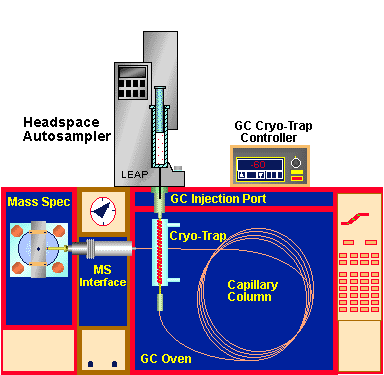
Figure 1 - Static Headspace System Components
Experimental
The LEAP Model CTC HS500 Headspace Autosampler was attached to the injection port of a HP Model 5890 Series II GC with electronic pressure control (Figure # 1). This headspace system uses a heated syringe concept to directly inject the headspace volatiles from a heated sample into the GC injection port (Figure #2). No long transfer lines or rotary valves are used in this system. The system is automated to permit the automatic injection and analysis of up to 50 samples unattended by the operator. Samples to be analyzed are placed into 10 ml glass vials with crimp tops which are sequentially inserted into a heated oven which can be agitated during the timed equilibrium step. Headspace volumes between 0.1 ml and 2.5 ml can be accurately removed from the sample into a heated syringe for injection into the GC. The HS500 Headspace Autosampler is mounted directly over the injection port of the GC in order to permit the direct injection of the sample into the GC injection port where the volatiles are subsequently trapped in the GC Cryo-Trap at the head of the GC column.
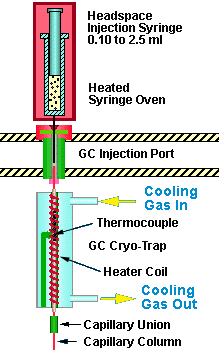
Figure 2 - Theory of Operation Of Headspace Sampler and GC Cryo-Trap
An HP 5890 Series II GC with electronic pressure control and a split/splitless injector was used for the following experiments. The HP Engine mass spectrometer was used as the detector in the EI mode. A J&W DB5-MS capillary column, 60 meters long by 0.32 mm I.D. x 0.25 micron film thickness was used in the GC oven.
The SIS GC-Cryo-Trap was attached to the bottom of the GC injection port inside the GC oven. A short 0.53 mm uncoated deactivated fused silica guard column was used from the GC injection port and through the GC Cryo-Trap. At the exit of the guard column, an SGE zero-dead volume union was used to join the uncoated guard column to the DB5-MS capillary column. The GC injection port was maintained at 200 degrees C and the GC Cryo-Trap was set for -160 degrees C during the trapping phase and 200 degrees C during the sample release phase and GC run time. The GC oven was temperature programmed from an initial 30 degrees C during the injection phase and to 200 degrees C at 4 degrees /min. The HP Engine (HP Model 5989 Mass Spec) was used for the detection and analysis of all compounds.
The LEAP Headspace Autosampler was used in the automatic mode. In fact, the entire process including sample equilibration, injection, cryo-trapping, release of volatiles and chromatography of the compounds was fully automated. The samples were placed into 10 ml headspace vials, sealed with PTFE lined septa, heated to 90 degrees C with agitation for 15 minutes in the sample block after which 1 to 2.0 ml gas samples were injected into the GC injection port. The samples were injected very slowly (25 ul/sec or 1.5 ml/min). This slow injection assures the full delivery of the analytes to the capillary column. Faster injection would result in sample splitting due to the backpressure design of the HP injection port. After injection into the cooled GC Cryo-Trap, the trap was maintained at the cryo-cooled temperature for at least another 3.0 minutes before the volatiles were released and the GC program begun. This cryo cooling equilibration time, after the injection is complete, permits the entire contents of the GC injection port to be passed onto the Cryo-Trap guard column and flushes the injection port of any remaining sample, thereby eliminating peak tailing and broadening. When the cryo-trap is rapidly heated, the released volatiles are eluted in a sharp band which produces highly resolved chromatography peaks.
Results and Discussion
Volatiles In Soil
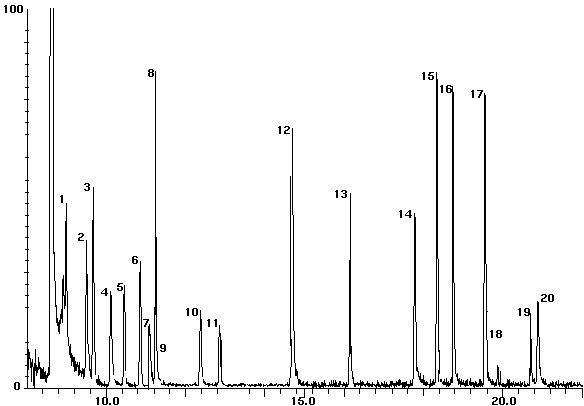
Figure 3 - Volatiles In Sand At 40ng/gr - Total Ion Scan Mass Spec Analysis
A mixture of 20 volatile organics was spiked into headspace vials containing 5.0 grams of clean sand plus 5.0 ml of purge and trap quality water at levels from 800 ng/gram of sand (ppb) down to 0.05 ng/gram (ppb). Two milliliters of the heated headspace volume was injected into the GC. The higher concentrations of samples (800 ng/gram down to 10 ng/gram) were analyzed via a full mass spec scan from 25 to 250 daltons. A typical chromatogram is shown in Figure #3. A SIM method was developed using the two most intense mass spec ions of each volatile organic to run the weaker samples (100 ng/gram down to 0.05 ng/gram) as demonstrated in Figure #4.
Figure 4 - Volatiles In Sand At 1.0ng/gr - SIM Mass Spec Analysis Both sets of data were individually analyzed to develop calibration curves via the HP ChemStation Software.
The results of the analysis of all the volatile organics via the two techniques are summarized in Figure #5. The calibration curves for all the volatiles via both techniques were linear with correlation coefficients close to 1.000 for all the compounds. This high degree of linearity for all the volatiles over more than 4 decades of sensitivity is extremely good considering no internal standard was used for any of the samples analyzed. The limits of detection of the analytes via the total ion scan is about 10 ng/gram of sand for most of the analytes. Via the SIM method the limits of detection of the analytes are about 0.1 ng/gram of sand. This 100 fold increase in sensitivity is in line with the theoretical expectations of increases in sensitivity of the SIM method over the total ion scan mode for mass spectrometers.
Headspace/Cryotrapping of Volatiles in Sand
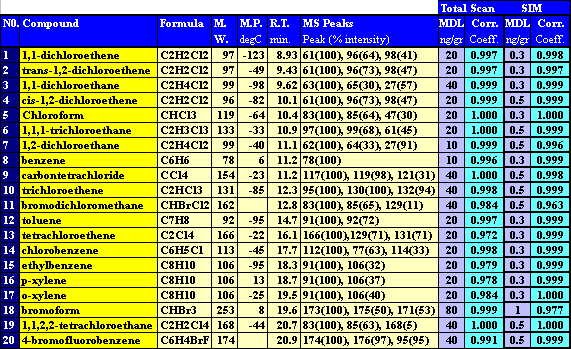
Figure 5 - Quantitative Analysis Via Total Ion Scan and SIM Methods To Evaluate Linearity Of the Analysis
Conditions For Determination Of Data Above
Headspace samples consisted of 5.0 grams of sand plus 5.0 ml of water plus volatiles. Analyze at levels from 800 ng/gr to 0.1 ng/gr. Equilibrate 25 min at 90 degrees C, then inject 2.0 ml of headspace volume into GC at 25 ul/sec (1.5 ml/min). Cryotrap at -160 degrees for 5.0 min, heat to 200 degrees to release volatiles and GC program from 30 degrees C to 100 at 4/min. Column 60 meter DB5-MS, 0.32 mm x 0.25 u film thickness. MDL is the amount of volatiles that can be accurately quantitated and with a signal to noise ratio of at least 10:1 in the chromatogram. A minimum of 10 points of quantification levels were used to set up the calibration curves and to determine the correlation coefficients.
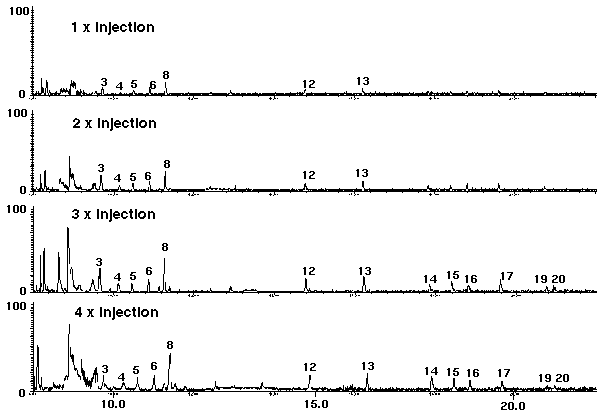
Figure 6 - Volatiles In Sand At 2.5 ppb Level - Multiple 2.0 ml Headspace Injections
2.5 ppb levels of volatiles in 5.0 grams of sand plus 2.5 ml water. Headspace Injection of 2.0 ml volumes onto blank capillary column and trap at 150 degrees C for 5.0 min. Then heat to 200 degrees C to release and chromatograph.
Multiple Injections
The cryo-focusing of volatiles at the front of the capillary column, enables the multiple injection of samples into the GC injection port. This is shown in Figure # 6. The same mixture of 20 volatile organics used above was spiked at a level of 2.5 ng/gram of sand into 5.0 grams of sand plus 5.0 ml of water. A 2.0 ml sample of the headspace volume was injected into the GC injection port at increasing numbers of repetitive injections. With a single injection only benzene (peak 8) is barely detectable. With increased numbers of injections, the analytes are more easily detected. Very little increase was seen between 3 and 4 injections because the injections originated from the same headspace sample vial. The limits of repetitive injection occurred at 5 injections where an ice plug developed in the GC Cryo-Trap. The multiple injection technique can be used to expand the usefulness of the headspace injection technique and increase the sensitivity of the analysis of volatile organics.
Reproducibility
A mixture of 10 volatile organics at a concentration of 500 ng/gram (ppb) in 5.0 grams of sand plus 5.0 ml of water were placed into the headspace sample vials and the headspace volume was injected into the GC and analyzed. Separate samples were analyzed 10 times to determine the reproducibility of the analysis technique and the results summarized in Figure #7. The GC retention times were repetitive within 0.01 minutes for all the volatiles and the Relative Standard Deviation for the peak areas was better than 5.0 % for all of the volatiles analyzed. This is very good, especially since no internal standard was used for the analysis. This data along with the data above demonstrates the linearity and reproducibility of this technique for the quantitative analysis of volatile organics. The headspace technique in combination with cryo-focusing can readily be incorporated into a scientifically acceptable method for the quantitative analysis of volatile organics in liquid and solid samples.
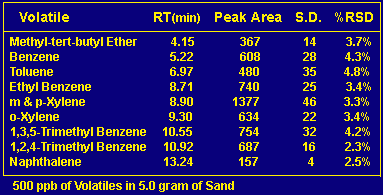
Figure 7 - Reproducibility of Headspace / GC Cryo-Trap
2.0 ml of Headspace gas at 90 degrees C, Cryo-Trap at -120 deg C for 5.0 min. Chromatograph on 0.32 mm x 60 meter x .25u DB5-MS Capillary Column.
Effect of Cryo-Trapping Temperature
The GC Cryo-Trap technique traps compounds based on their melting point when using an uncoated capillary guard column. The range of volatiles that are trapped can be varied by adjusting the GC Cryo-Trap temperature. For this study, 0.5 ul of gasoline was injected into 5.0 ml of water in a headspace vial. The headspace vial was heated to 70 degrees C and 1.0 ml of the headspace gas was injected into the GC injection port and then cryo-trapped at various temperature between -60 degrees C and -180 degrees C (Figure #8). At -60 degrees C volatile hydrocarbons down to hexane are trapped. The lighter volatiles pass through the GC Cryo-Trap and capillary column during the injection and equilibrium steps of the method. If the mass spec or GC detector were left on during this sampling period, these lighter compounds which are not trapped would appear as broad low intensity GC peaks. Lower trapping temperatures will trap increasingly lower melting point volatiles. Hydrocarbons down to ethane can be trapped at temperatures of -180 degrees C. This ability to control the melting range of volatiles that can be trapped can be a useful analytical technique and permit the modification of the operational parameters to analyze or not analyze a range of volatile organics.
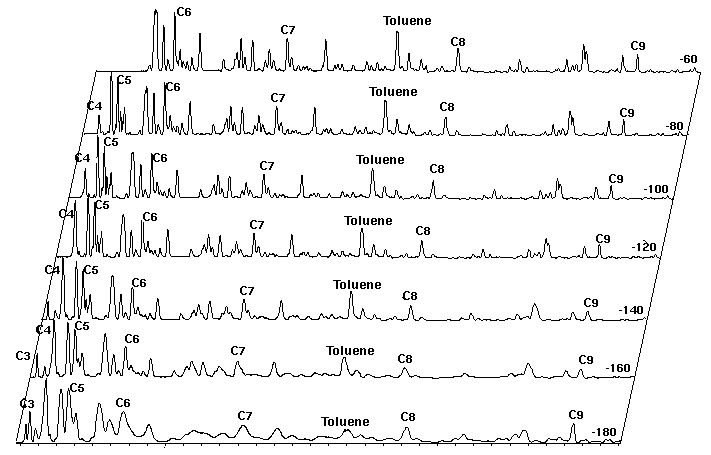
Figure 8 - Headspace Analysis of Gasoline In Water Onto a Capillary GC Column
0.5 ul gasoline in 5.0 ml of water, Heat to 70 degrees C., Inject 1.0 ml into 0.32 mm DB-5 MS Capillary column and trap at various temperatures.
Analysis of Gasoline in Soil Samples
Figure #9 displays the quantitative results of a gasoline sample in various sample matrices. For this study, 0.5 ul of gasoline was injected into headspace vials containing water, sand plus water and finally top soil plus water. As above the headspace vial was heated to 70 degrees C and 1.0 ml of the headspace, gas was injected into the GC injection port. All of the volatiles were easily detected in the water sample. In the pure sand plus water sample, the results were near identical. Sand has little affinity or binding effect on the volatile organics. However, in the top soil plus water sample, the volatiles above toluene and octane are not readily detected. Even many of the lower boiling volatile organics such as benzene and toluene exhibit lower peaks heights in the chromatogram. These results have been observed in other studies in which soils, especially top soils and clay soils, have a strong binding effect on many organic compounds. Increased sensitivity of the volatiles in the soils have been achieved by heating the headspace sample vial to a higher temperature. However, due to the high levels of water, this temperature is limited to 95 degrees C.
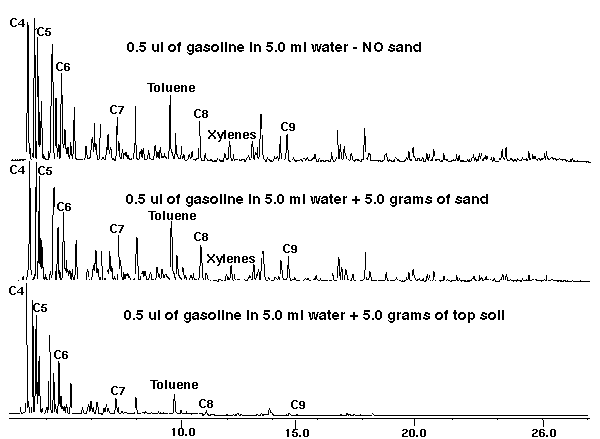
Figure 9 - Headspace Yields On Gasoline Spiked Into Sand and Top Soil
0.5 ul ofgasoline in 5.0 ml of water - NO SAND
Conclusion
The use of the GC Cryo-Trap in conjunction with the automated headspace system has proven to be a powerful technique. This combination of hardware permits the quantitative analysis of volatiles in various matrix samples over more than 4 decades of sensitivity utilizing capillary GC columns. Most previous GC headspace methods have been done using packed GC columns and megabore capillary columns. However, it is now possible to inject large gas volumes (0.5 ml to +100 ml) into a microbore capillary column by concentrating the analytes in a narrow band at the front of the GC column over a time period from 1.0 minute to >30 minutes, then rapidly releasing the analytes for chromatography. The relatively slow injection of large sample volumes at injection rates of more than 1.0 ml/min eliminates the normal splitting of samples which would occur with faster sample injection. All of the volatiles are passed onto the capillary column and cryo-trapped and concentrated in a narrow band at the front of the GC column or guard column inside the GC Cryo-Trap.
The resulting GC peaks are highly resolved, the retention times extremely reproducible and the areas of the GC peaks reproducible and linear over more than 4 decades of sensitivity. The techniques permit the adjustment of a number of variables such as the sample temperature, the gas volume injected, the trapping temperature and the release temperature. This will permit the development of experimental conditions to fit the needs of the chemist. This technique can be used for applications such as the analysis of volatiles in soils, residual solvents in pharmaceuticals, blood alcohols and other headspace techniques that could profit from the analysis of compounds on a capillary column or which could be enhanced by the injection of larger gas sample volumes or repetitive injections onto the GC column. The use of the GC Cryo-Trap can expand the range of usefulness of the GC headspace technique.