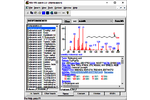
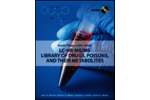
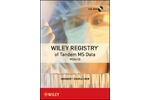
Wiley's libraries of MS spectra, MS/MS spectra, GC data & retention indices, and chemical names/structures can enhance your compound identification capabilities. Wiley libraries can be searched in the same manner, using the same search software, as the popular NIST MS database, and include [5~formats for most MS software systems (Agilent ChemStation/MassHunter, Thermo Xcalibur, Shimadzu GCMS Solutions, Waters MassLynx, Thermo Xcalibur, PE TurboMass, etc.). Some Wiley libraries focus on specific classes of compounds like drugs, pesticides, flavors and fragrances. Other Wiley libraries like the massive Wiley Registry are general in purpose and optionally combined with NIST MS. Some libraries like the Wiley Tandem contain MS/MS spectra.
Availabile Wiley and NIST libraries include
| Library Name | Date | EI MS spectra | MS/MS spectra | GC and retention index records |
|---|---|---|---|---|
| NIST MS '11 (recommended base library) | 2011-06 | 243893 | 95409 | 346757 |
| NIST GC '11 (included with NIST MS) | 2011-06 | 346757 | ||
| NIST MSMS '12 (included with NIST MS) | 2012-07 | 95409 | ||
| Wiley 10th | 2013-04 | 719000 | ||
| Wiley 10th+NIST11/12 combined | 2013-04 | 918000 | 95409 | 346757 |
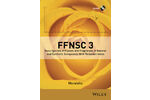
| Wiley Flavors/Fragrances (FFNSC) | 2011-11 | 3000 | Yes | |
| Wiley Designer Drugs | 2013-05 | 19037 | 11061 | |
| Wiley Drugs/Poisons/Pesticides/Pollutants & Metabolites (Maurer/Pfleger/Weber) | 2011 | 8650 | Yes | |
| Wiley Physiologically Active Substances (drugs, steroid hormones, and endocrine disruptors) | 2011-05 | 4182 | ||
| Wiley Pesticides (Rolf Kühnle) | 2009 | 1238 | ||
| Wiley Pesticides with Retention Indices (Luigi Mondello) | 2011 | 958 | 958 | |
| Wiley Androgens/Estrogens/Steroids | 2008 | 3722 | ||
| Wiley Organic Compounds | 2004 | 37055 | ||
| Wiley Geochemicals/Petrochemicals/Biomarkers | 2003 | 1100 | ||
| Wiley Tandem MSMS (MSforID) | 2011 Jul | 12048 | ||
| Chart lists number of spectra or data records for each library. | ||||
and search software:
| Program Name | Included with | Purpose |
|---|---|---|
| NIST MS Search | NIST11 and Wiley databases | EI MS, structural, and some GC and MS/MS matching against libraries; browsing, PBM, structural, and PBM search of the multiple libraries |
| NIST AMDIS | NIST11 and free | GC/MS data reading, viewing, deconvolution, and target identification; integrated with NIST MS Search |
| NIST GC software | NISTGC | GC data lookup (specialized version of NIST MS Search enhanced for GC) |
| SmileMS | SmileMS | LS MS/MS datasets matching against multiple MS/MS libraries |
Wiley Celebrates over 40 years of publishing the Wiley Registry™ with Dr. Fred McLafferty by announcing the 10th edition of the Wiley Registry of Mass Spectral Data. This is the largest mass spectral library ever commercially available.
The Wiley Registry™ of Mass Spectral Data is one of the most trusted and comprehensive mass spectral libraries in the world, and the gold standard for detection, identification and quantification in
|
|
Now in its 10th edition, the Wiley Registry™ contains approximately 719,000 EI mass spectra of 638,000 compounds with 684,000 searchable structures. Spectra are sourced from leading laboratories throughout the world. Most spectra are accompanied by the structure and trivial name, molecular formula, molecular weight, nominal mass and base peak.
| Wiley 10th | Wiley 9th | Wiley 8th | Wiley 7th | Wiley 10th /NIST12 | Wiley 9th /NIST11 | Wiley 9th /NIST08 | Wiley 8th /NIST08 | Wiley 8th /NIST05 | Wiley 7th /NIST05 | Wiley 7th /NIST02 | |
|---|---|---|---|---|---|---|---|---|---|---|---|
| Total spectra | 719,000 | 662,000 | 399,383 | 338,000 | >918,000 | >800,000 | 796,000 approx | 562,000 | 532,573 | 461,000 | 444,000 |
| Unique compounds | >638,000 | 592,000 | 310,000 | 289,000 | ~736,000 | >680,000 | 667,000 approx | (not listed) | (not listed) | (not listed) | 360,000 |
| Chemical names | >3 million | (not listed) | 2M | 570,000 | >3 million | (2.9M approx) | 2.9M approx | >2M | >2M | 820,528 | 811,000 |
| CAS assignments | (not listed) | (not listed) | 246,000 | 221,000 | (not listed) | (not listed) | (not listed) | (not listed) | (not listed) | 222,553 | 303,000 |
| Spectra w/ drawn structures | 684,000 | 565,000 | 182,000 | 184,000 | >877,000 | 770,000 approx | 746,000 approx | 360,000 | 319,256 | (not listed) | 229,000 |
| GC Retention Index Library (NIST), Num Compounds | none | none | none | none | 70,838 | 70,838 | 44,000 | 44,000 | none | none | none |
| Spectra Type | 70eV EI mass spectra. Versions with NIST include MS/MS spectra and GI/RI data as well. | ||||||||||

Figure: Number of spectra
The Wiley Registry™ of Mass Spectral Data started in the early 1960s through a collaboration of Drs. Einar Stenhagen, Sixten Abrahamsson, and Fred W. McLafferty, culminating in its publication in print in 1968 as the Atlas of Mass Spectral Data. The criteria for collecting the spectra are based on those established by the Non-Petroleum Mass Spectrometrists (NPMS) in 1956 for the collection of "Uncertified" EI mass spectra. These spectra were for compounds that were either new or had not necessarily been measured using standards. This was opposed to the American Petroleum Institute™s (API) collection, which insisted on "perfect" contributions); Dr. McLafferty was the first Chair of the NPMS committee. The reasons for choosing a looser criterion can be found in the most fundamental science behind mass spectrometry and its primary use. The most important use of an EI mass spectral database is for the identification of unknown mass spectra, especially those of "global unknowns." For this, the user needs a database giving the highest probability that the best match(s) for her/his unknown mass spectrum will be correct or of a closely related compound. In contrast to other "spectroscopies," mass spectrometry structural information comes from destroying the molecule. Rigid instrumentation standards gave the "perfect" API spectrum; however, without standards, a "perfect" MS spectrum is an oxymoron. Not only do the product yields vary dramatically with temperature, pressure, instrumental mass discrimination, etc., but dissociation can occur before ionization, even from bimolecular reactions.
The most important use of an EI mass spectral database is for the identification of unknown mass spectra, especially those of "global unknowns". -- Dr. Fred W. McLafferty
Fred W. McLafferty, born in 1923, received his undergraduate degree from University of Nebraska, his PhD from Cornell and his postdoctorate from University of Iowa. In 1950, he became responsible for mass spectrometry and gas chromatography at the Dow Chemical Co. In 1964, he moved to Purdue and four years later back to Cornell where he still remains an active scientist. Today, Fred McLafferty has co-authored over 450 scientific publications and overseen the Wiley Registry for the apst 40 years. Fred McLafferty became a member of the National Academy of Sciences in 1982 and the American Academy of Arts and Sciences in 1985. Among the number of awards received by Fred McLafferty, we note the Analytical Chemistry Fisher Award in 1981, the J.J. Thomson Gold Medal in 1985, the ACS award on Instrumentation in 1989 and the Mass Spectrometry Field and Franklin Award in 1989.
Professor Fred McLafferty is a name synonymous with the development and refinement of the mass spectrometric techniques. Dr. McLafferty was the founding father of the fundamental mechanistic scheme in mass spectrometry with systematic interpretation of mass spectra that eventually has made computerised spectral interpretation possible.
Dr. McLafferty's pioneering contributions involve many areas like gaseous ion reactions (McLafferty rearrangement), instrumentation (GC/MS, LC/MS, MS/MS), special techniques (collision activated dissociation, neutralization-reionization, electron capture dissociation, pico-spray), computer data acquisition, reduction, and identification (Probability Base Matching) reference data (392K spectra), and high resolution MS/MS characterization of biomolecules and gas-phase protein folding.
The new Wiley 10 + NIST 11/12 combined library.
The Wiley 10th Edition/NIST 2011/2012 (W10/N12) combines the two most trusted collections in mass spectrometry to provide one of the most comprehensive and chemically diverse libraries ever available. Now, with the complete NIST software package bundled with every license, the Wiley/NIST provides the tools every lab needs for applications ranging from compound identification to metabolomics.
collision cell 108,678 5,109 9,232 Ion Trap 12,908 5,723 12,047 Total 121,586 6,999 15,180
Comprehensive coverage of small molecule organics, pharmaceutical drugs, illegal drugs, poisons, pesticides, steroids, natural products, organic compounds, flavors and fragrances, CWC banned substances and precursors, and industrial compounds.
Wiley takes the guesswork out of installation by bundling multiple manufacturer-native formats of the libraries on each DVD and providing a simple Web-browser installation screen. Each library has been tested and optimized to run on the current versions of most manufacturer's software. Below are the formats available on each DVD:
Disc 1: Wiley Registry 10th + NIST 11 (2011) Combined Library
Disc 2: NIST/EPA/NIH 2011/2012
NIST Software unpacker / complete NIST installation
The Wiley Registry of Mass Spectral Data is compatible with most manufacturer GC/MS software. Each package contains a native manufacturer format + NIST MS Search format.
Multiple format DVD contains mass spectral library in the following formats: MS Search (compatible with most mass spectrometry software), Agilent Chemstation (compatible with Chemstation and MassHunter), PerkinElmer TurboMass, Shimadzu GCMS Solution, Thermo Spectral ID, and Waters MassLynx. System requirements: Windows XP SP3, Windows VISTA SP2, Windows 7, DVD drive, 2GB RAM, 2-16GB free disk space, compatible mass spectrometry software.
The Wiley upgrade (#WILEYW10U) requires proof of purchase of any previous edition of the Wiley Registry (the restriction of having 6th or above was removed; any version will now do). The Wiley+NIST upgrade (#WILEY10N12U) requires proof of purchase of any earlier version of the Wiley Registry/NIST or prior purchase of both the Wiley Registry and the NIST/EPA/NIH Mass Spectral Library (any previous versions of Wiley and NIST).
| UOM=EA | |||||
| Part No. | Description | est wt. |
Quantity In Stock |
Price | Quantity to order |
|---|---|---|---|---|---|
| WILEY10 | Wiley Registry 10th | 0 | 0[*L]Standard lead-time for out-of-stock items is approximately two weeks depending on the item. | $8375.00 | |
| WILEY10U | Wiley Registry 10 Upgrade | 0 | 0[*L]Standard lead-time for out-of-stock items is approximately two weeks depending on the item. | $5795.00 | |
| WILEY10N12 | Wiley 10 NIST 12 combined library | 0 | 0[*L]Standard lead-time for out-of-stock items is approximately two weeks depending on the item. | $10495.00 | |
| WILEY10N12U | Wiley 10 NIST 12 Upgrade combined library | 0 | 0[*L]Standard lead-time for out-of-stock items is approximately two weeks depending on the item. | $8845.00 | |
| [*L] Standard lead-time for out-of-stock items is approximately two weeks depending on the item. | |||||
Ordering information.
International (non-US) prices available through your
local dealer.
|
|||||
(old part numbers: WILEYW9AP,WILEYW9UP,WILEYW9N11UP,WILEYW9N11,WILEYW8AP,WILEYW8UP,WILEYW8N8AP,WILEYW8N8UP,WILEYW9N8UP,WILEYW9N8AP)
Ordering Notes:
ISBN Cross Reference:
May 2011, by Maria Kristina Parr, Georg Opfermann, Wilhelm Schänzer, Hugh L. J. Makin
Steroids are of considerable therapeutic importance and play a substantial role in endocrinology, a medicine branch dealing with disorder of the endocrine system, an integrated system of small organs that involve the release of extracellular signaling molecules known as hormones.
On the other hand, steroids are increasingly being abused for performance enhancement by professional athletes, Olympians and even amateurs. The identification of small amounts of steroids in body fluids is an analytical challenge. GC/MS is one of the key analytical techniques applied in these areas. For the fast and reliable identification of steroids, mass spectral reference data are essential.
This collection is an invaluable resource for doping control, endocrinology, and clinical toxicology. Steroids are of considerable therapeutic importance but are increasingly being abused for performance enhancement.
This collection has been expended in collaboration with the Institute of Biochemistry, German Sport University Cologne, and now contains 4182 mass spectra and chemical structures of androgens and estrogens, their trimethylsilyl-, O-methoxyoxime- and acetal derivatives, and beta-2-agonists. Most spectra have been obtained on the same mass spectrometer under identical conditions. The data records include chemical name, chemical structure, molecular formula, and synonyms. Average number of peaks: 145.
Available Database Formats: ACD; Agilent Chemstation; NIST MS SEARCH; Finnigan GCQ, SSQ, TSQ, ICIS, ITS40, Magnum; INCOS; PE Turbomass; Shimadzu QP-5000; Thermo Galactic SpectralID; Varian Saturn; VG Labbase, Masslab; Waters Masslynx; Xcalibur.
| Part No. | Description | UOM | est wt. |
Quantity In Stock |
Price | Quantity to order |
|---|---|---|---|---|---|---|
| 9783527330805 | MS of Physiologically Active Substances. 2011 | EA | 0 | 0[*L]Standard lead-time for out-of-stock items is approximately two weeks depending on the item. | $4855.00 | |
| [*L] Standard lead-time for out-of-stock items is approximately two weeks depending on the item. | ||||||
Ordering information.
International (non-US) prices available through your
local dealer.
|
||||||
ISBN: 978-3-527-33080-5
May 2013, by Peter Rösner
Compounds classified as Designer Drugs have been synthesized since the early 1980s. This is not a precise scientific term and should only be applied to those drugs that are synthesized from common chemicals and skillfully marketed under attractive, often exotic names.
Because many designer drugs are novel or designed to evade detection, they can be overlooked or difficult to detect or characterize. The last decade has seen a proliferation of such substances, such that keeping abreast of this huge number of new drugs is a difficult task for forensic chemists and toxicologists. Compiled by a team originating from the Regional Departments of Criminal Investigation in Kiel, Hamburg, and Wiesbaden, Germany, Mass Spectra of Designer Drugs has been developed to help forensics and toxicology labs combat this epidemic.
Mass Spectra of Designer Drugs 2013 covers the entire range of designer drugs up to December 2012. Approximately 70% of the compounds covered in the Designer Drugs do not appear in either NIST 2011 or the Wiley Registry of Mass Spectral Data, 9th Edition.
The MS/MS data are a valuable and complementary supplement to the EI GC/MS collection. The MS/MS data have been acquired under standardized conditions and are fully searchable.
| Class | Edition: 2013 | Edition: 2012 | Edition: 2011 | Edition: 2010 | Edition: 2009 | 2008 | 2007 | 2006 | 2005 |
|---|---|---|---|---|---|---|---|---|---|
| Total Compounds: | 15556 | 13420 | * | 10450 | 9436 | 8300 | 6029 | 4694 | 2959 |
| Total Spectra: | 19037 | 16178 | * | 12312 | 11011 | 9658 | 7006 | 5531 | 3437 |
| Average peaks per spectrum: | 169.5 | 162.4 | * | 161 | 160 | 156 | 152 | ||
| Average Quality Index: | 940.5 | 935.7 | * | 938 | 932 | 930 | 925 | ||
| Experimental Kovats indices: | 11,061 (58.1%) | 8607 | * | 5866 | 4957 | 3892 | 2159 | ||
| Chemical structures: | included | ||||||||
| Amphetamines: | 1,469 | 1125 | * | 1030 | 904 | 724 | 569 | ||
| Methylenedioxy-phenethylamines: | 666 | 590 | * | 533 | 514 | 503 | 402 | ||
| Phenethylamines: | 2,014 | 1555 | * | 1340 | 1032 | 767 | 332 | ||
| Tryptamines: | 462 | 366 | * | 317 | 243 | 207 | 91 | ||
| Piperazines: | 904 | 887 | * | 361 | 356 | 257 | 105 | ||
| Opiates: | 259 | 253 | * | 233 | 146 | 122 | 118 | ||
| Fentanyles: | 320 | 326 | * | 320 | 240 | ? | ? | ||
| Cathinones: | 504 | 432 | * | 267 | 98 | 98 | 85 | ||
| Phencyclidines: | 16 | 17 | * | 14 | 14 | 11 | 11 | ||
| Tropines: | 97 | 102 | * | 73 | ? | ? | ? | ||
| Indoles: | 894 | 244 | * | 145 | ? | ? | ? | ||
| Barbiturates: | 79 | 75 | * | 58 | 56 | 55 | 96 | ||
| Cannabinoids: | 255 | 213 | * | 84 | ? | ? | ? | ||
| Cannabimimetics: | 528 | 165 | * | 57 | ? | ? | ? | ||
| Steroids: | 190 | 140 | * | 63 | ? | ? | ? | ||
| Arylpropan-2-amines: | 266 | 159 | * | 109 | 102 | 39 | 39 | ||
| Arylbutan-2-amines: | 433 | 413 | * | 394 | 386 | 333 | 298 | ||
| indane-2-amines | 67 | 46 | |||||||
| 1-aryl-2-nitro-ethenes: | 43 | 42 | * | 41 | 41 | 33 | 26 | ||
| 1-aryl-2-nitroprop-1-enes: | 68 | 65 | * | 65 | 64 | 56 | 42 | ||
| 1-aryl-2-nitrobut-1-enes: | 44 | 44 | * | 44 | 45 | 38 | 39 | ||
| Benzaldehydes: | 150 | 146 | * | 141 | 144 | 124 | 114 | ||
| Designer drug isomers: | * | 899 | * | 606 | 375 | 329 | ? | ||
| Derivatives: | 5724 | 4533 | * | 3587 | 3258 | 2824 | ? | ||
| Metabolites incl. derivatives: | 4136 | 3298 | * | 2596 | 2366 | ||||
| Chemical warfare agents: | 71 | 71 | * | 67 | 67 | 67 | 166 | ||
| Designer drug precursors: | 1,158 | 725 | * | 639 | 588 | 446 | 236 | ||
| Benzodiazepines: | 272 | 269 | * | 238 | 218 | 205 | 187 | ||
| Pharmaceutical drugs incl. metabolites: | 4,460 | 4254 | * | 3357 | 3132 | 1975 | 1429 | ||
| Pesticides: | 315 | 304 | * | 199 | 166 | 147 | 125 | ||
| Explosives: | 53 | 45 | * | 25 | 24 | 26 | 17 | ||
| Controlled compounds: | 2621 | 1550 | * | 1148 | 1043 | 858 | ? | ||
| (* data not available) | |||||||||
Edited by Dr. Peter Rösner, Designer Drugs 2013 updates previous editions of the database, and is updated annually.
Compatible with most current and legacy mass spectrometry data systems, including:
Peter Rösner (born 1944) studied Chemistry at the University of Kiel (Germany). In 1981 he became head of the toxicology department at the state agency of criminal investigation (Landeskriminalamt) in Kiel, where he focuses on drug identification and structure elucidation with GC/MS methods. Since 1992 he has also been a lecturer for mass spectrometry at the University of Kiel. In 2005, Dr. Rösner received the Jean-Servais-Stas Award from the Society of Toxicological and Forensic Chemistry in honor of his outstanding work in forensic sciences. Thomas Junge (born 1959) studied Technical Chemistry at the University of Applied Science of Lübeck (Germany). Since 1985 he has been a specialist for daughter ion mass spectroscopy in the toxicology department at the Landeskriminalamt in Kiel. His contribution was essential in building a mass spectral daughter ion data base for the structure eludication of new designer drugs. Folker Westphal (born 1965) studied Chemistry at the Universities of Hannover and Kiel (Germany), and also holds a degree as Special Chemist for Toxicology from the University of Leipzig. From 1999 to 2004 he worked at the Institute of Legal Medicine in Kiel as forensic scientist. Since 2004 he is leader of the section "Analysis of Drugs of Abuse and Forensic Toxicology" at the Landeskriminalamt in Kiel. Giselher Fritschi (born 1944) studied Chemistry at the Universities of Mainz and Karlsruhe (Germany). After a postdoc year at the University of Marburg he joined the Bundesgesundheitsamt (Federal Health Office) in Frankfurt. In 1978 he changed to the Landeskriminalamt in Wiesbaden as forensic expert for toxicological analysis, focusing on the structure elucidation of new designer drugs.
Organic chemists involved in structure elucidation; Spectroscopists; Chemical and pharmaceutical companies; Chemistry, biochemistry and pharmaceutical faculties; Governmental institutions; Crime laboratories; Doping control laboratories.
| UOM=EA | |||||
| Part No. | Description | est wt. |
Quantity In Stock |
Price | Quantity to order |
|---|---|---|---|---|---|
| 9783527334001 | Designer Drugs 2013 library | 0 | 0[*L]Standard lead-time for out-of-stock items is approximately two weeks depending on the item. | $4535.00 | |
| 9783527334018 | Designer Drugs 2013upgade | 0 | 0[*L]Standard lead-time for out-of-stock items is approximately two weeks depending on the item. | $1895.00 | |
| [*L] Standard lead-time for out-of-stock items is approximately two weeks depending on the item. | |||||
Ordering information.
International (non-US) prices available through your
local dealer.
|
|||||
ISBN: 978-3-527-33400-1 (2013), 978-3-527-33401-8 (2013 upgrade), 978-3-527-33332-5 (2012), 978-3-527-33333-2 (2012 upgrade), 978-3-527-32833-8 (2011), 978-3-527-32834-5 (2011 upgrade), 978-3-527-32725-6 (2010), 978-3-527-32726-3 (2010 upgrade), 978-3-527-32392-0 (2009), 978-3-527-32393-7 (2009 upgrade), 978-3-527-31899-5 (2008), 978-3-527-31979-4 (2007), 978-3-527-31980-0 (2007 Upgrade), 9783527321476 (2007 CD-ROM+Print).
See also: Combatting Designer Drugs Head On (remote), Chemistry Views, May 2012, Sewall -- "Before a mass spectrum of a compound enters Mass Spectra of Designer Drugs, it is examined by at least three experienced mass spectrometrists skilled in mass spectral interpretations. Any single electron ionization mass spectrum additionally passes through an incorruptible computerized process. This digital evaluation process ends with the calculation of Quality Index for Reference Mass developed by Professor Fred W. McLafferty. This quality index (QI) is a numerical value between 0 and 1000 and the product of seven quality factors. In only rare cases such as ion trap spectra, metabolites, very compact molecules, or an uncommon substance-specific fragmentation, are spectra with a quality index below 900 accepted."
by Rolf Kühnle, June 2009
A pesticide is any substance or mixture of substances intended for preventing, destroying, repelling, or mitigating any pest. Because most pesticides are designed to be toxic to their target pest and because any substance can be harmful if used improperly, pesticide use is strictly controlled. Environmental monitoring and reliable identification of pesticides in small amounts requires sophisticated analytical techniques such as mass spectrometry. To identify a pesticide, searchable mass spectral reference data are indispensible. This new 2009 collection includes 1238 high quality mass spectra of pestizides such as insecticides, acaroids, nematicides, fungizides, rotendicides, mollucicides and repellents. The mass spectra are unreduced. Chemical structure, CAS RN, synonym and systematic name, molecular weight, molecular formula and experimental conditions complete the data record.
Available Database Formats: Agilent Chemstation; NIST MSSEARCH; Finnigan GCQ, SSQ, TSQ, ICIS, INCOS, Iontrap, ITS40, Magnum; PerkinElmer TurboMass; Shimadzu QP-5000; Thermo Galactic SpectralID; Varian Saturn; VG Labbase, Masslab; Waters Masslynx; Xcalibur
| Part No. | Description | UOM | est wt. |
Quantity In Stock |
Price | Quantity to order |
|---|---|---|---|---|---|---|
| 9783527324880 | Mass Spectra Pesticides 2009 | EA | 0 | 0[*L]Standard lead-time for out-of-stock items is approximately two weeks depending on the item. | $1750.00 | |
| [*L] Standard lead-time for out-of-stock items is approximately two weeks depending on the item. | ||||||
Ordering information.
International (non-US) prices available through your
local dealer.
|
||||||
ISBN: 978-3-527-32488-0
by Prof Luigi Mondello, November 2011
The Purest Samples Make the Best Pesticides Library
Mass Spectra of Pesticides contains 925 pesticides and 33 saturated hydrocarbons (C7-40) spectra with retention indices and chemical structures. All the spectra, registered with official CAS information, have been acquired from the injection of pure chemicals. All the retention indices reported have been verified with data reported in the specific literature, and tested for repeatability. The compounds had been tested three times during a six-month period.
The mass spectra and retention indices registered in the Mass Spectra of Pesticides library were obtained using the Shimadzu GCMS- QP2010 by the Mondello group of the University of Messina in Italy using the SLB-5ms.
Available Formats: Formats included on the disc include Agilent Chemstation and Masshunter, ACD/Labs MS Manager, NIST software (compatible with JEOL, Leco, Bruker, Thermo xCalibur), PerkinElmer TurboMass, Thermo Spectral ID, Waters TurboMass. Note: We do not offer the Shimadzu GCMS Solution format.
| Part No. | Description | UOM | est wt. |
Quantity In Stock |
Price | Quantity to order |
|---|---|---|---|---|---|---|
| 9781118145821 | PESTICIDES MASS SPECTRAL LIBRARY | EA | 0 | 0[*L]Standard lead-time for out-of-stock items is approximately two weeks depending on the item. | $1250.00 | |
| [*L] Standard lead-time for out-of-stock items is approximately two weeks depending on the item. | ||||||
Ordering information.
International (non-US) prices available through your
local dealer.
|
||||||
by Prof Luigi Mondello
A Powerful Tool for Advanced Component Identification in Complex Mixtures
2nd Edition Expanded by 64%
Essential oils are mixtures consisting of monoterpene and sesquiterpene hydrocarbons, their oxygenated derivatives, and aliphatic oxygenated compounds. The difficulties that arise in the GC-MS peak identification of these complex samples is due to the fact that many terpenes have identical mass spectra. This is a consequence of similarities both in the initial molecule, or in the fragmentation patterns and rearrangements after ionization. Hence, MS identification of these compounds should always be accompanied by retention time information that may support the MS library search results. This innovative MS library for natural and synthetic products (essential oils, perfumes, etc.) makes the identification of unknown compounds in complex mixtures easier, faster and more reliable.
The use of chromatographic information, such as Linear Retention Index (LRI), can be used to filter MS results, enabling the more reliable peak assignment of components in complex mixtures.
Mass spectra, relative to standard and well-known simple matrix components, were obtained and recorded through GC-MS separation/identification. Furthermore, traditional information relative to each component (CAS number, common name, CAS name, molecular weight, compound formula, chemical class) plus linear retention index values are entered.
Flavors and Fragrances of Natural and Synthetic Compounds, 2nd edition contains 3000 mass spectra, LRI retention data, calculated Kovats RI, and searchable chemical structures of compounds of interest for the flavors and fragrances industry. Prepared by the Prof. Luigi Mondello under rigorous measurement conditions, the mass spectral library contains compounds central to flavor and fragrance research.
Statistics:
version: 2.0 1.3 # spectra: 3000 1831
Coverage includes the most important flavors and fragrances compounds.
Applications: Industrial R&D and Quality Assurance: a high quality collection of natural and synthetic compounds for the flavors and fragrances industry critical for quality assurance, quality control, flavors and fragrance R&D, and competitive intelligence.
Prof. Luigi Mondello is a leading figure in flavors and fragrances research, and is editor of the Journal of Separation Science and of Flavour and Fragrance Journal, both published by John Wiley & Sons and serves as a reviewer for 19 different Journals in the field of Analytical Chemistry and Food Chemistry.
Prof. Dr. Luigi Mondello is Professor at the Dipartimento Farmaco-chimico of the University of Messina, Italy. He received a degree in Chemistry from the University of Messina in 1991. Prof. Mondello teaches the course of Analytical Chemistry and of Food Chemistry at the School of Pharmacy of the University of Messina, and the course of Food Chemistry at the Campus Biomedico in Rome. He is the author of about 100 scientific papers, 13 book chapters, 2 reviews co-editor of a book on Multidimensional Chromatography (Wiley), and he has been chairman and invited lecturer in national and international congresses and meetings. His research interests include Chromatography techniques (HRGC, HPLC, HRGC/MS, HPLC/MS, OPLC) and the development of coupled techniques such as LC-GC-MS, GC-GC, Orthogonal GC, LC-LC and their applications in the study of natural complex matrices. Prof. Mondello has been member of the organizing committees of national and international meetings and he is permanent member of the scientific committee of the International Symposium on Capillary Chromatography held in Riva del Garda, Chairmen of the 35th International Symposium on Essential Oils, member of the Committee of the Italian Separation Science Group of the Italian Chemical Society, member of the advisory board of Journal of Separation Science and editor of Flavour and Fragrance Journal.
| UOM=EA | |||||
| Part No. | Description | est wt. |
Quantity In Stock |
Price | Quantity to order |
|---|---|---|---|---|---|
| 9781118145838 | MASS SPECTRA-FLAVORS & FRAGRANCES OF NATURAL AND SYNTHETIC COMPOUNDS 2ND EDITION REPLACES 9780470425213 | 0 | 0[*L]Standard lead-time for out-of-stock items is approximately two weeks depending on the item. | $3000.00 | |
| 9781118145845 | MASS SPECTRA FLAVORS/UPG AND FRAGRANCES OF NATURAL & SYNTHETIC COMPOUNDS 2ND EDITION (UPGRADE) | 0 | 0[*L]Standard lead-time for out-of-stock items is approximately two weeks depending on the item. | $1200.00 | |
| [*L] Standard lead-time for out-of-stock items is approximately two weeks depending on the item. | |||||
Ordering information.
International (non-US) prices available through your
local dealer.
|
|||||
ISBN: 2.0: 978-1-1181-4583-8; 2.0 upgrade from 1.3: 978-1-118-14584-5; old 1.3 version: 978-0-470-42521-3
by Hugh L. J. Makin
Steroids are of considerable therapeutic importance but are increasingly being abused for performance enhancement. This newly expended collection contains 3722 mass spectra and chemical structurs of androgens and estrogens and their trimethylsilyl-, O-methoxyoxime- and acetal derivatives. Most spectra have been obtained on the same mass spectrometer under identical conditions. The data records include chemical name, chemical structure, molecular formula, and synonyms. Average number of peaks: 157.
Available Database Formats: Agilent Chemstation; NIST MSSEARCH; Finnigan GCQ, SSQ, TSQ, ICIS, INCOS, Iontrap, ITS40, Magnum; INCOS; PE Turbomass; Shimadzu QP-5000; Thermo Galactic SpectralID; Varian Saturn;VG Labbase, Masslab; Waters Masslynx; Xcalibur
Professor Hugh L. J. Makin, Forensic Toxicology, G K Consultants, UK.
| UOM=EA | |||||
| Part No. | Description | est wt. |
Quantity In Stock |
Price | Quantity to order |
|---|---|---|---|---|---|
| 9783527321933 | MS-ANDROGENS;ESTROGENS & other Steroids 2008 | 0 | 0[*L]Standard lead-time for out-of-stock items is approximately two weeks depending on the item. | $5440.00 | |
| 9783527322992 | MS of Adrogens; Estrogens; and other Steroids 2008 Upgrade | 0 | 0[*L]Standard lead-time for out-of-stock items is approximately two weeks depending on the item. | $3020.00 | |
| [*L] Standard lead-time for out-of-stock items is approximately two weeks depending on the item. | |||||
Ordering information.
International (non-US) prices available through your
local dealer.
|
|||||
ISBN: 978-0-471-74945-5
by Hans H. Maurer, Karl Pfleger, Armin A. Weber
The world's most comprehensive reference for clinical and forensic toxicologists is keeping pace with recent developments in clinical and forensic toxicology in its new release: Another 1000 new spectra have been revised or added to this gold standard, including novel therapeutics, designer drugs, herbal drugs, and a broad range of AIDS therapeutics, for a total of 8,650 clinically relevant substances, including more than 5,200 metabolites.
To aid in compound identification, all substances are classified according to their toxicological categories. The bundle of database (on CD-ROM) and printed atlas (in two hardbound volumes) contains the carefully collected and verified mass spectral and GC data for almost 9000 substances, complete with an overview on experimental methods, plus compound indices by name and substance category. A truly unique collection of data obtained over the course of almost three decades.
Acaricides, Alcohol deterrents, Alkaloids, Anabolics, Analgesics/Antiphlogistics, Deuterated Analytical standards, Androgens, Anesthetics, Anorectics, Anthelmintics, Antiamebics, Antiandrogens, Antiarrhythmics, Antibiotics, Anticholesteremics, Anticoagulants, Anticonvulsants, Antidepressants, Antidiabetics, Antidiarrheals, Antidotes, Antiemetics, Antiestrogens, Antifreezes (Glycols), Antihistamines, Antihypertensives, Antimalarials, Antimigraines, Antimycotics, Antineoplastics, Antioxidants, Antiparkinsonians, Antirheumatics, Antiseptics, Antispasmotics, Antitussives, Beta-Blockers, Biomolecules, Bronchodilators, Ca Antagonists, Chemicals, Coronary dilators, Corticoids, Counterirritant, Derivatizing agents, Dermatics, Designer drugs, Disinfectants, Diuretics, Emetics, Estrogens, Expectorants, Fatty acids, Flavors, Fungicides, Gestagens, Heat transfer agents, Herbicides, Hydrocarbons, Hypnotics, Ingredients of tar, Insecticides, Laxatives, Local anesthetics, Molluscicides, Muscle relaxants, Neuroleptics, Parasympatholytics, Parasympathomimetics, Pesticides, Plant ingredients, Plasticizers, Pollutants, Potent analgesics, Potent antitussives, Preservatives, Psychedelics, Refrigerants, Rodenticides, Rubber additives, Rubefacients, Scabicides, Sedatives, Serotonin antagonists, Softeners, Solvents, Stimulants, Sugars, Sugar alcohols, Sweeteners, Sympathomimetics, Thrombocyte aggregation, Thyreostatics, Toccolytics, Tranquilizers, Tuberculostatics, Uricosurics, Urinary antiseptics, UV Absorbers, Vasoconstrictors, Vasodilators, Virustatics, Vitamins.
The international non-proprietary names for drugs (INN), the common names for pesticides and the chemical names for chemicals are used. If necessary, a synonym index, should be consulted. If the compound is a common metabolite or derivative of several parent compounds, then all known parent compounds are given.
The formulas are redrawn in the molefile format allowing their use in electronic databases. They are zoomed to fit the available space. Formulas of metabolites or artifacts are those of their probable structures. If the position of a substituent is unknown, the substituent is fixed with a tilde. Unknown substituents are named "R".
The molecular masses were calculated from the atomic masses of the -most abundant isotopes.
The RIs were measured by GC-MS on methyl silicone capillary columns -using a temperature program. The RIs of compounds with an asterisk (*) -are not detectable by nitrogen-selective flame-ionization detection (NFID).
The compound could be detected in the given samples after the given sample preparation. These data have been evaluated from about 80000 clinical and forensic cases.
The Registry Number of the Chemical Abstracts Services (CAS) is given -here. If only derivatives or metabolites of a compound were included in -this handbook, the CAS number of the corresponding parent compound -with the prefix "#" is given.
Type of sample from which the spectrum was recorded. If the spectrum -was recorded from samples of biological origin, it should be taken into -consideration that fragment ions from sample impurities may be present -in the spectrum. With experience, it is possible to decide whether these -ions can be ignored.
The major pharmacological category is given. Additional information including abbreviations are given in the Print ersion.
Available Database Formats: ACD; Agilent Chemstation; NIST MSSEARCH; Finnigan GCQ, SSQ, TSQ, ICIS, INCOS, Iontrap, ITS40, Magnum; INCOS; PE Turbomass; Shimadzu QP-2010; Thermo Galactic SpectralID; Varian Saturn;VG Labbase, Masslab; Waters Masslynx; Xcalibar.
Note (2007): Under MassHunter, the ChemStation .L format in this library is "reduced," which means it displays fewer peaks. This is not the case with the other formats. This issue is planned to be worked on. Please ask us if you need a status update on this.
Structures are drawn in mol file format.
Toxicologists; Clinical Chemists; Environmental Chemists; -Spectroscopists; Forensic Scientists; Hospitals; Investigating Authorities -
"An invaluable source of reference for any environmental, toxilogical or analytical laboratory" -- Rapid Communications in MS
Karl Pfleger was appointed head of the Department of Toxicology at the Saarland University in Homburg/Saar, Germany, in 1967. In the late 1970s he developed, together with his PhD student Hans H. Maurer, novel analysis procedures for identification and Quantification of drugs, poisons and their metabolites in body samples. they introduced mass spectrometry as the gold standard into clinical and forensic toxicology. In 1985, they published the first edition of their unique handbook of GC and MS data together with Armin A. Weber, who was and is responsible for all technical and software developments, including the mass spectral database that was developed from the printed collection. In 1987, Karl Pfleger received the Jean-Servais Stas Medal of the Gesellschaft fur Toxikologische und Forensische Chemie (GTFCh). In 1992, Karl Pfleger retired and Hans H. Maurer became his successor as professor and head of the department. His main areas of research are analytical t oxicology (GC-MS, LC-MS) and metabolism of xenobiotics. He has published over 130 original papers and 20 invited reviews. He has received several scientific awards, including the Young Investigator Award of the Homburg Medical Faculty in 1983, the Irving Sunshine Award for Outstanding Contributions to Clinical Toxicology of the International Association of Therapeutic Drug Monitoring and Clinical Toxicology (IATDMCT) in 1997, the Alan Curry Lifetime Achievement Award of The International Association of Forensic Toxicologists (TIAFT) for Outstanding Contributions to Forensic Toxicology in 2003, and the Doctor Honoris causa title of the University of Ghent in 2007. He is the current President of IATDMCT (since 2007), Councillor of TIAFT (since 2005) and treasurer of GTFCh (since 1987).
Edition # Data Sets Revised/Added 1st edition 1985 1500 2nd edition 1992 4700 supplemental 2000 6700 3rd edition 2007 7840 1900 4th edition 2011 8650 >1000 Compounds by class (2011): metabolites +5200 acetylated +3800 methylated +1500 trimethylsilylated +1200 triflouroacetylated +800 pentaflouroacetylated +500 heptaflourobutyrylated +500
| UOM=EA | |||||
| Part No. | Description | est wt. |
Quantity In Stock |
Price | Quantity to order |
|---|---|---|---|---|---|
| 9783527323982 | MASS SPECTRAL LIBRARY OF DRUGS; POISONS; PESTICIDES & POLLUTANTS AND THEIR METABOLITES 2011 CDROM/PRINT | 0 | 0[*L]Standard lead-time for out-of-stock items is approximately two weeks depending on the item. | $6895.00 | |
| 9783527323999 | MASS SPECTRAL LIBRARY OF DRUGS; POISONS; PESTICIDES & POLLUTANTS AND THEIR METABOLITES 2011/CDROM/PRINT; *UPGRADE FROM 2007* | 0 | 0[*L]Standard lead-time for out-of-stock items is approximately two weeks depending on the item. | $3500.00 | |
| [*L] Standard lead-time for out-of-stock items is approximately two weeks depending on the item. | |||||
Ordering information.
International (non-US) prices available through your
local dealer.
|
|||||
ISBN: 978-3-527-32398-2 (2001), (old 2007 version): 9783527321469,9783527323289,9873527315383
by Alexander Yarkov
The collection contains 37,055 mass spectra of organic compounds. The data resulted from quality control in combinatorial synthesis and cover a wide range of structure classes. The compounds are applied for screening purposes in drug discovery.
Each record contains:
Mass Spectra of Organic Compounds is an exceptional value for labs focused on combinatorial synthesis.
Availability: Benchtop/SPC, Excalibur, Finnigan ICIS, Finnigan -INCOS, Finnigan Ion-Trap, Finnigan Magnum, Finnigan GCQ, Finnigan SSQ, -Finnigan TSQ, Finnigan ITS-40, Fisons VG Masslab, Fisons VG LabBase, Agilent Chemstation, NetCDF, NIST MSSEARCH, PE Turbomass, Shimadzu -QP-5000, Varian Saturn
Alexander Yarkov, Institute of Physiologically Active Compounds RAS, -Russia.
| Part No. | Description | UOM | est wt. |
Quantity In Stock |
Price | Quantity to order |
|---|---|---|---|---|---|---|
| 9780471667735 | MS of Organic Compounds 2004 | EA | 0 | 0[*L]Standard lead-time for out-of-stock items is approximately two weeks depending on the item. | $2000.00 | |
| [*L] Standard lead-time for out-of-stock items is approximately two weeks depending on the item. | ||||||
Ordering information.
International (non-US) prices available through your
local dealer.
|
||||||
ISBN: 978-0-471-66773-5
by J. W. De Leeuw
This high-quality database for the organic, geo-, and/or petrochemist features:
Prof. Dr. J.W. de Leeuw is Chair of Organic Geochemistry, Department of Earth Sciences - Geochemistry, Faculty of Geosciences, -Utrecht University, The Netherlands.
| Part No. | Description | UOM | est wt. |
Quantity In Stock |
Price | Quantity to order |
|---|---|---|---|---|---|---|
| 9780471647980 | MS of Geochemicals; Petrochemicals and Biomarkers - 2003 | EA | 0 | 0[*L]Standard lead-time for out-of-stock items is approximately two weeks depending on the item. | $2095.00 | |
| [*L] Standard lead-time for out-of-stock items is approximately two weeks depending on the item. | ||||||
Ordering information.
International (non-US) prices available through your
local dealer.
|
||||||
ISBN: 978-0-471-64798-0
Mass Spectra of Pharmaceuticals and Agrochemicals 2006, by Rolf Kühnle, ISBN: 978-3-527-31615-1. has been superseded by Mass Spectra of Pesticides.
![]() Yttria coated filament at start |
![]() Yttria coated filament after 16,000 cycles |
New Pumps Added to the List of LOW COST S.I.S. Rotary Vane
Vacuum Pumps - Save 35 - 50% off the price of comparable vacuum pumps.
Adixen (Alcatel) ACP Series Compact Dry Roughing Pumps - a frictionless pumping module, optimized for operation without internal lubricant.
- Direct Replacement for the Shimadzu QP5000 Filament.
PCI Analytics Products - product solutions for all Analytical Instrumentation
SilTite FingerTite, the next generation GC capillary ferrule system without the use of any tools.
(25% discount until Oct 31)
Direct Replacement for the Heated Capillary in the Thermo-Fisher Scientific TSQ & LCQ Mass Spectrometers now available
- Ideal for use in analytical instrumentation
- Will improve your laboratory workflow and reporting confidence in many ways
DigiVac Bench Top Vacuum Gauges
- Vacuum instrumentation with everything you need to go to work
Imtakt HPLC Columns
-offer a wide variety of unique stationary phases in their HPLC
columns
Programmable syringe pumps for controlled flow. Model NE-300 priced at only $275.00
NEW: Wiley 9th Edition - 660,000-850,000
spectra (a 65% increase).
NEW: Agilent 5973/75 Replacement Source
Heater and Temperature Sensor
NEW: SIS Direct Replacement
Filament for the Amatek/Dycor RGA Leak Detectors and Quadrupoles
(p/n 95381VE), which tests have shown increase service life.
NEW: SIS
Replacement Filter Elements For Edwards Oil Mist Eliminators -
Save up to 25% off the price of comparable Edwards replacement
elements.
Identify mass spectra via library
search with the fully-evaluated, most widely used mass spectral
reference library, compiled by the National Institute of Standards
and Technology (NIST).
View and capture images or video at
20x/400x power on a PC computer via attached USB cable.