

Home
- ▶
- Heaters/Source
- ▶
- Agilent Heaters and SensorsMass Spectrometry, Scientific Supplies & ManufacturingScientific Instrument Services 5973 Source Heater Tamper Resistant Allen Wrench 5973/5975 Quad Sensor 5985 Source Heater Assembly Agilent Interface Heater Assembly 5971 Interface Heater
- ▶
- Instrument Tubing
- ▶
- Gas RegulatorsModel 3530 Series - Single Stage Purity Brass Regulator Model 3510 Series - Single Stage High Purity Stainless Steel Regulators Model 3120 Series - Dual Stage Purity Brass Regulator Model 3810 Series - Dual Stage High Purity Stainless Steel Regulators Tescom Gas Line Regulators 3420 Series Tescom Gas Line Regulators 3450 Series Concoa In-Line Regulators Model 304 Series Concoa In-Line Regulators Model 324 Series
- TD
- ▶
- AccessoriesTD Supply Kit Desorption Tubes Adsorbent Resins Desorption Tube Needles Desorption Tube Seals Desorption System Fittings GC Cryo-Trap Extraction Cell TD Sample Loader Prepacked, Conditioned Desorption Tubes Desorption Tube Packing Accessories Stainless Steel Purge Heads Injection Port Liners Tenax TA Poster TD Application Notes Customer Service
- GCColumns Fused Silica Tubing Instrument Tubing Injection Port Liners Septa by Manufacturer SIS GC Cryo-Traps Ferrules Valves Swagelok® Fittings Pyrolysis Probe Accessories Gas Generators Gas Regulators Gas Purifiers and Filters Syringes SGE MEPS™-Micro Extraction by Packed Sorbent Purge and Trap System SGE SilFlow™ Stainless Steel Micro-Fluidic Platform Accessories NIST GC RI Library Other GC Supplies Catalog Page D1
- ▶
- GC Cryo-traps (This Page)
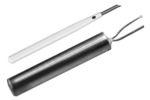
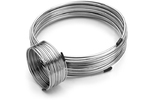
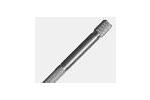
Adds Cryo-Cooling Capabilities to your GC.
Programmable cryo-cooling and heating trap for the cryo-focusing of volatiles and semi-volatiles at
the head of GC capillary columns.
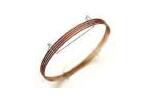
The GC Cryo-Trap is used to cryo-focus volatiles at the front of the GC column in a narrow band for subsequent heating and release. We offer multiple sizes, with both CO2 cooling gas or (for lower molecular weight volatiles) liquid nitrogen.
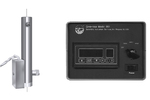 SIS 4-Inch GC Cryo-Trap
(Model 951/961)4-in long cryo-trap for cryo-cooling and heating (cryo-focusing) of volatiles and semivolatiles at the head of GC capillary columns.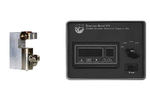 SIS 1-Inch Micro Cryo-Trap
(Model 971/981)1-inch micro cryo-traps for cryo-cooling and heating (cryo-focusing) of volatiles and semivolatiles at the head of GC capillary columns.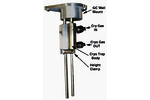 SIS 2-Inch CryoTrap for the AutoDesorb® System and TD5 CryoTrap for the AutoDesorb System
Applications
- Thermal Desorption Sample Trapping
- Purge and Trap Systems
- GC Headspace Sample Analysis
- Multi-dimensional GC applications
- Improve Chromatographic Resolution of Early Eluting Peaks
Theory/Notes
Sizes
- 4-inch cryo-trap - 4" long. For high flow applications (1 to 50 mL/min). Variety of Custom I.D.'s Available.
- 1-inch ("micro") cryo-trap - Only 1" long. Best for Microbore GC Capillary Columns. Easily installs inside GC Oven without interfering with column connectors. Uses smallest volume of cooling gases.
- 2-inch cryo-trap for the AutoDesorb - TD5 Thermal Desorption.
- Custom Manufactured Cryo-Traps