

- ▶
- Heaters/Source
- ▶
- Agilent Heaters and SensorsMass Spectrometry, Scientific Supplies & ManufacturingScientific Instrument Services 5973 Source Heater Tamper Resistant Allen Wrench 5973/5975 Quad Sensor 5985 Source Heater Assembly Agilent Interface Heater Assembly 5971 Interface Heater
- ▶
- Reference Material on InstrumentationArticle - A High Temperature Direct Probe for a Mass Spectrometer Design of a Direct Exposure Probe and Controller for use ona Hewlett-Packard 5989 Mass Spectrometer SIS AP1000 AutoProbe™ SIS AP2000 AutoProbe™ - Description of System HPP7: Direct Probe Electronics Console HPP7: Direct Probe for the Agilent (HP) 5973/5975 MSD HPP7: HP Direct Probe Application Notes HPP7: Installation Directions for the Direct Probe HPP7: Side Cover for the HP 5973 MSD HPP7: Support HPP7: Probe Inlet System for the Agilent (HP) 5973 and 5975 MSD with Automatic Indexed Stops HPP7: Theory of Operation of the Direct Probe and Probe Inlet System Direct Thermal Extraction Thermal Desorption Application Notes Environmental Thermal Desorption Application Notes Food Science Thermal Desorption Application Notes Forensic Thermal Desorption Application Notes GC Cryo-Trap Application Notes Headspace Application Notes Purge & Trap Thermal Desorption Application Notes Theory of Operation of the AutoDesorb® System AutoDesorb Notes for SIS Dealers Adsorbent Resin Application Notes Installation of the Short Path Thermal Desorption System on Agilent (HP) and Other GCs Installation of the Short Path Thermal Desorption System on a Varian 3400 GC AutoDesorb® System Development Team Thermal Desorption Applications and Reference Materials Installation of the Short Path Thermal Desorption System - TD5 Part I - Design & Operation of the Short Path ThermalDesorption System Installation Instructions for the Model 951 GC Cryo-Trap on the HP 5890 Series GC Installation Instructions for the Model 961 GC Cryo-Trap on the HP 5890 Series GC Operation of the Model 951/961 GC Cryo-Trap SIS GC Cryo Traps - Theory of Operation NIST/EPA/NIH Mass Spectral Enhancements - 1998 version (NIST98) SIMION 3D Ion Optics Class Mass Spectrometer Source Cleaning Methods MS Tip: Mass Spectrometer Source Cleaning Procedures Mass Spec Source Cleaning Procedures Micro-Mesh® Abrasive Sheets Research Papers Using New Era Syringe Pump Systems EI Positive Ion Spectra for Perfluorokerosene (PFK) Cap Liner Information How do I convert between fluid oz and milliliters? Which bottle material should I choose? Which bottle mouth should I choose? The Bottle Selection Guide CGA Connections for Gas Tanks Chemical Reaction Interface Mass Spectrometry (CRIMS)

- LiteratureApplication Notes Adsorbent Resins Guide Mass Spec Tips SDS Sheets FAQ MS Calibration Compound Spectra Manuals MS Links/Labs/ Organizations MS Online Tools Flyers on Products/Services Scientific Supplies Catalog About Us NextAdvance Bullet Blender® Homogenizer Protocols Micro-Mesh® Literature Instrumentation Literature Agilent GC/MS Literature SIS News / E-Mail Newsletter NIST MS Database - Update Notifications
- ▶
- Chemical Reaction Interface Mass Spectrometry (CRIMS) (This Page)
 51. Development and Characterization of a New Chemical Interface for the Detection of Nonradioisotopically Labeled Analytes Using Mass Spectrometry (CRIMS)
(EAS 96)Development and Characterization of a New Chemical Reaction Interface for the Detection of Nonradioisotopically Labeled Analytes Using Mass Spectrometry (CRIMS)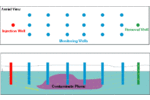 67. Using Chemical Reaction Interface (CRIMS) to Monitor Bacteria Transport in Situ
(PittCon 98)USING CHEMICAL REACTION INTERFACE MASS SPECTROMETRY (CRIMS) TO MONITOR BACTERIAL TRANSPORT IN IN SITU BIOREMEDIATION 68. Using a Plug In UV-Vis Spectrometer to Monitor the Plasma Conditions in a GC CRIMS
(EAS 98)Use of a PC plug-in UV-Vis spectrometer to monitor the plasma conditions in GC-CRIMS.- 76. Determination of the Sensitivity of a CRIMS System
(ASMS 98)Setermination of the Sensitivity of a CRIMS System
Scientific Instrument Services was developing both GC and LC CRIMS systems. These products was based on the work and methods of Fred Abramson of George Washington University. The GC CRIMS system was built and was being tested in our laboratory. The GC-CRIMS systems will be introduced at the EAS meeting in Somerset, NJ in November 1997.
For additional information please contact us.
Description of CRIMS
Chemical Reaction Interface/Mass Spectrometry is a selective, sensitive, and versatile technique by which specific isotopes or elements can be monitored. CRIMS parallels the use of radioisotopes in that each technique monitors for elemental tags that are independent of the tags chemical structure or environment. In the CRIMS technique chromatography effluent is introduced into a high-temperature microwave plasma. The analyte molecules are decomposed and then reacted with a specific reactant gas. This results in a small number of well characterized polyatomic products. These compounds are then detected by mass spectrometry. The generation of new small compounds reduces the possibility of interference from isotopologs and eliminates the large isotopic mass profiles found in larger molecules. The isotope ratios measured in CRIMS can easily be used to identify and quantify the presence of isotope tags. A chromatogram showing only enriched species can therefore be produced. CRIMS has the important advantage that stable isotopes may be used as tags. This eliminates the use of radioactive material and greatly expands the possible applications of isotopic labeling. These applications can be found in pharmacology, geology, and environmental science. The limit of detection for radio labeled material is better with GC-CRIMS than by on-line radio-chromatography. CRIMS references and a review can be found here.
For more information please contact us.
Additional Keywords:
isotopic labeling enrichment chemical tags tracers metabolism petroleum degradation radiotracers radioisotopes
CRIMS Applications
The CRIMS technique allows stable isotopes to be used in a wide variety of tagging and tracing applications. It is clear that stable isotopes may be substituted in most applications where radioactive species are currently used. There are, however a large number of new applications wherein isotopic labeling is now practical. In many of these the use of radioactive material is inappropriate because of safety or economic concerns. These disadvantages are eliminated with the use of stable isotopes. A good example is the study of drug metabolism in children. In this case it would be difficult to justify injecting radioactive species into a child but the use of stable isotopes does not present any problems. Other examples include: the analysis of material degradation and concentration, studies of transport systems, and the tagging of manufactured materials. Isotope labeling is most advantageous when the form of the final chemical to be detected is unknown (as in metabolism) or when the species to be tagged is normally difficult to identify, separate, or detect (as with an internal standard).
Material degradation and concentration involves either the breakdown of a compound or the concentration of a material via some man made or natural process. The degradation of DDT to DDE is an example in which both of these events occur. First DDT degrades in to the more toxic DDE. This compound is then concentrated in raptors via the food chain. In addition to the degradation of pharmaceuticals and pesticides, stable isotopes are currently under consideration for monitoring the decay of materials such as explosives and pollutants.
The study of transport systems covers a wide range of applications. These may range from the atmospheric distribution of pollutants to the under ground flow of fluids (i.e. water or oil). The petroleum industry has made wide use of tracers to further the understanding of oil and water flows in sub surface oil deposits. In some cases tracers have been used to monitor the activity of compounds in process streams (U.S. Patent 4,966,711, 10/30/1990). Even the study of building air circulation is a candidate for stable isotope tracers.
Manufactured products are often tagged to help identify their source. Examples, included explosives, pharmaceuticals, and petroleum products. The use of stable isotopes clearly has the advantage as taggents because they eliminate the need to add extra materials that can effect the function or performance of the product. Stable isotopes also make an ideal internal standard because they will behave in almost exactly the same way as an unlabeled chemical.
The academic and patent literature includes a wide range of examples in which materials other than stable isotopes are used as taggents or tracers. With the availability of the CRIMS analysis method, the extension of many of these works to include the use of stable isotopes is possible. We suggest that the use of stable isotopes should be considered anytime tagging or tracing is required. This consideration is a simple process for anyone familiar with a specific application. Some examples of applications where the use of stable isotopes and CRIMS may be appropriate are included in the above references. These are, however, only intended to serve as examples and do not include all possibilities.
A list of the elements currently used in CRIMS is shown below. However, any element with a stable isotope is a CRIMS candidate.
H, C, N, O, P, S, Cl, Se, Br.
Note that the term stable isotope may include radioactive species with a relatively long half-life.
CRIMS Application Notes
- 51. Development and Characterization of a New Chemical Interface for the Detection of Nonradioisotopically Labeled Analytes Using Mass Spectrometry (CRIMS) (EAS 96)
- 67. Using Chemical Reaction Interface (CRIMS) to Monitor Bacteria Transport in Situ (PittCon 98)
- 68. Using a Plug In UV-Vis Spectrometer to Monitor the Plasma Conditions in a GC CRIMS (EAS 98)
- 76. Determination of the Sensitivity of a CRIMS System (ASMS 98)
CRIMS Bibliography
The following is a summary of papers and presentations relating to the CRIMS technique. If you have knowledge of additional references, please notify us and they will be included in this list.
1. Selective detection of selenium in water utilizing chemical reaction interface mass spectrometry, Moini, Mehdi; Li, Guoqiang; Perez, Freserico; Ibarra, Flor E.; Sandoval, DiegJ. Mass Spectrom. VOL. 32 NO. 4 1997 PP. 420-424. NO-ABSTRACT
Keywords: selenium detection water mass spectrometry
2. Element- and isotope-specific detection for high-performance liquid chromatography using chemical reaction interface mass spectrometry, McLean, Matt; Vestal, Marvin L.; Teffera, Yohannes; Abramson, Fred P. J. Chromatogr., A VOL. 732NO. 2 1996 PP. 189-199
Abstract: A Vestec Universal Interface (UI) and chemical reaction interface (CRIMS), as described by Markey and Abramson(Anal. Chem., 1982, 54, 2375), was developed and used as an element- and isotope-specific HPLC detector for the analysis of a series of biomolecules (listed). The HPLC effluent flowed into the CRIMS cavity (a microwave-powered reaction cell) where the molecular species were broken down to elements and the continuous addition of oxidizing reactant gas (usually S2) resulted in the formation of simple gaseous products. The solvents from the column effluent were removed in the Universal Interface (UI)which provided a dry particle beam for the CRIMS cavity. The system was optimized for the HPLC analysis of a mixture of isotope-labeled amino-acids on a Kromasil C18 column (15 cm.times. 4.6 mm i.d.) with water/methanol or water/acetonitrileas mobile phases and 70 eV EIMS detection. The CRIMS was directly connected via fused-silica tubing (38 cm. x 0.53 mm i.d.) to an Extrel quadrupole mass spectrometer operating with selected-ion monitoring at m/z = 30, 31, 44, 45, and 76,respectively, for 14NO, 15NO, 12CO2, 13CO2 and CS2 in each chromatographic peak. Isotopically labeled and unlabelled compounds ranging from small molecules to macromolecules were used as model analytes and the chromatograms were presented.
Keywords: biomolecules --determination. of, by HPLC-MS, interfaces for chromatography, liquid, high-performance --coupled with MS, chemical reaction interfaces for, in element- and isotope-selective detection of biomolecules; mass spectrometry--coupled with HPLC, element- and isotope-selective detection of biomolecules. HPLC mass spectrometry element detection; liquid chromatography isotope specific detection
3. Liquid chromatography/chemical reaction interface mass spectrometry as an alternative to radioisotopes for quantitative drug metabolism studies, Goldthwaite, Charles A. Jr.; Hsieh, Feng-Yin; Womble, Scott W.; Nobes, Brian J.; Blair, Ian A.; Klunk, Lewis J.; Mayol, Robert F. Analytical Chemistry v 68 n 17Sept 1 1996. p 2996-3001.
Abstract: Chemical reaction interface mass spectrometry(CRIMS) was coupled on-line with HPLC using a Vestec particle beam interface. Experiments were conducted with the antianxiety agent buspirone in order to validate the methodology. Metabolites from in vitro incubations of left bracket SUP1SUP5N right bracket/ left bracket SUP1SUP4C right bracket buspirone with rat liver slices were analyzed by gradient LC/CRIMS and by gradient LC/left bracket SUP1SUP4C right bracket radioactivity counting. The response from LC/CRIMS analysis for individual metabolites was then compared with that obtained by LC/ left bracket SUP1SUP4Cright bracket radioactivity counting. An excellent correlation was observed between the two methods for metabolites with quite different HPLC characteristics. Thus, gradient LC/CRIMS in combination with stable isotopes provides an alternative to using radioisotopes for carrying out drug metabolism studies. 31 Refs.
Keywords: Addition reactions; Drug interactions; Interfaces(materials); Mass spectrometry; Metabolism; Metabolites; Particle beams; Radioisotopes; Solvents IDENTIFIER(S)- Chemical reaction interface mass spectrometry; Helium assisted nebulizer; Quantitative drug metabolism; Thermospray nebulizer; Vestec particle beam interface, Universal Interface.
4. Stable-isotope dilution studies of an intact protein using HPLC/chemical reaction interface mass spectrometry, Osborn, Blaire L.; Abramson, Fred P. Anal. Biochem. VOL. 229 NO.2 1995 PP. 347-50. NO-ABSTRACT
Keywords: phycocyanin isotope dilution HPLC mass spectrometry; protein isotope dilution HPLC mass spectrometry.
5. Nitrogen trifluoride: a new reactant gas in chemical reaction interface mass spectrometry for detection of phosphorus, deuterium, chlorine, and sulfur, Song, Hengchang; Abramson, Fred J. Am. Soc. Mass Spectrom. VOL. 6 NO. 5 1995 PP. 421-7NO-ABSTRACT
Abstract: Chemical reaction interface MS (CRIMS) was used to selectively detect P-containing compounds by generation of PF5with fluorine. PF4+ (m/z 107) the main fragment ion of PF5 was used to determine the detection limit; sensitivity was 10 pg/sand the linear dynamic range was 103. The method was also suitable for detecting hydrogen isotopes, Cl and S with NF3 as reactant gas. Selected-ion monitoring was performed at m/z 20, 21and 69 for deuterium; m/z 69 and 127 for S; and m/z 20, 21, 56,69, 107 and 127 for Cl. CRIMS was applied to the detection of cyclophosphamide and its metabolite in plasma.
Keywords: deuterium --detection of, by chemical reaction interface MS; phosphorus ; sulfur; chlorine; cyclophosphamide, blood plasma; fluoride nitrogen reactant gas mass spectrometry; nitrogen trifluoride
6. CRIMS: chemical reaction interface mass spectrometry, Abramson, Fred P. Mass Spectrom. Rev. VOL. 13 NO. 4 1994 341-56.NO-ABSTRACT
Keywords: review chemical reaction interface mass spectrometry.
7. Implementation of the chemical reaction interface mass spectrometry technique on a Hewlett-Packard mass-selective detector, Song, Hengchang; Kusmierz, Jozef; Abramson, Fred; McLean, Matt J. Am. Soc. Mass Spectrom. VOL. 5 NO. 8 1994 PP.765-71. NO-ABSTRACT
Abstract: A microwave-powered chemical reaction interface was installed in a Hewlett-Packard gas chromatograph (5890 II)-mass spectrometer system (5971 mass-selective detector); details given. The system was used to analyze urine from a dog given an oral dose of 5 mg/kg 15N3-midazolam. The urine was filtered, incubated at pH 4.5-5 and 37.degree. C for 24 h with glucuronidase/sulfatase and the mixture subjected to SPE with aC18 Alltech Maxi-Clean cartridge. Elution was with aqueous methanol. Each eluted fraction was dried and derivatized with N-trimethylsilyltrifluoroacetamide and acetonitrile. The derivatized sample was analyzed by GC on a column (30 m.times.0.25 mm i.d.) coated with DB-5 (0.1.mu.m) with temperature programming from 80.degree. C (held for 1.5 min) to 110.degree. Cat 30.degree. C/min then to 270.degree. C (held for 10 min) at6.degree. C/min, He as carrier gas and MS with selected ion monitoring at m/e 30, 31, 44, 45 and 76. Detection limits were 1ng of 13C-, 15N- and Cl-containing compounds with signal-to-noise ratios better than or equal to 3. Detection of 15N and Cl was highly selective.
Keywords: chromatography, gas --coupled with MS, in pharmaceutical analysis; mass spectrometry --coupled with GC, in pharmaceutical analysis; urine determination. of midazolam, drug detection mass spectrometry detector; mass spectrometry detector reaction interface
8. Tracing 15N with chemical reaction interface mass spectrometry: a demonstration using 15N-labeled glutamine and asparagine substrates in cell culture, Kusmierz, J. J.; Abramson, F. P. Biol. Mass Spectrom. VOL. 23 NO. 12 Dec 1994 PP.756-763.
Abstract: Chemical reaction interface MS (CRIMS) was used to quantitate 15N and was applied to the study of amino-acid metabolism in cultured human hepatoma HepG2 cells incubated with12mM-?.alpha.-15N?glutamine or -?.alpha.-15N? asparagine. Details of the preparation of cell extracts and culture media are given. Samples were separated by GC on a column (30 m. times. 0.25mm i.d.) coated with DB-5 (0.25.mu.m) operated with temperature programming from 70.degree. C (held for 4 min) to 270.degree. C(held for 15 min) at 3.degree. C/min. Eluting analytes were decomposed with the using SO2 as reactant gas. The CRIMS system was described previously (Song and Abramson, Anal. Chem., 1993,65, 447). Analysis was performed on an Extrel C50/400 quadrupole instrument operated in the selected ion monitoring mode (CO2 m/z 44; NO at m/z 30 and 31). Enriched 15N spectra were acquired with the 'CALC' function of the Teknivent Vector 1 data system(available from Scientific Instrument Services, Inc.) to subtract NO at m/z 31 (details given). The detection limit for 15N was 17pg. The RSD was 3%. The calibration graph for 15N-alanine was linear. Results are discussed.
9. Application of high-performance liquid chromatography/chemical reaction interface mass spectrometry for the analysis of conjugated metabolites: a demonstration using deuterated acetaminophen, Teffera, Yohannes; Abramson, Fred Biological Mass Spectrometry v. 23 no.12 Dec 1994. p 776-783.
Abstract: The combination of a universal high-performance liquid chromatography/mass spectrometry (HPLC/MS) interface (UI)and the element and isotope-selective capabilities of the chemical reaction interface (CRI) has potential as a comprehensive analysis system for drug conjugates. In this work, we found equal sensitivity for model compounds as their sulfate or glucuronide conjugates. We examined urine and bile samples from Syrian golden hamsters after dosing with(SUP2HSUB4)acetaminophen (DSUB4-APAP), with particular emphasis on the rich range of conjugated metabolites that are known to be produced. Seventeen metabolites were quantified from a single chromatogram of urine; 14 were conjugates. With a combination of authentic standards, selective hydrolysis, and sulfur-selective CRIMS detection, at least partial identification of most of these metabolites was accomplished. The glutathione conjugate of APAP appears the dominant metabolite in bile. The quantitative pattern of APAP metabolism found here is consistent with literature values. It does appear that this HPLC/UI/CRIMS combination has substantial ability to carry out comprehensive metabolite determinations, especially for conjugated species. (Author abstract) 21 Refs.
Keywords: Drug products; High performance liquid chromatography; Hydrolysis; Metabolism; Metabolites, Acetaminophen; Bile; Conjugation moieties; Glucoronide; Glutathione; Glutathione conjugate; Sulfate; Urine.
10. Tracing SUP1SUP5N with chemical reaction interface mass spectrometry: a demonstration using SUP1SUP5N-labeled glutamine and asparagine substrates in cell culture, Kusmierz, Jozef J.; Abramson, Fred P. Biological Mass Spectrometry v 23 n 12 Dec1994. p 756-763.
Abstract: This research demonstrates how the chemical reaction interface mass spectrometry (CRIMS) approach works for a study of amino acid metabolism in cell culture. SUP1SUP5N-selectivechromatograms from both the culture medium and the cytosol of human hepatoma Hep G2 cells that were incubated in the presence of either 12 mM ( alpha -SUP1SUP5N) glutamine or ( alpha-SUP1SUP5N) asparagine have been produced. The time course of the distribution of SUP1SUP5N among different amino acids, as well as the enrichment for each amino acid, were observed over a 144 hr period. Labeled glutamine was quickly converted into glutamate. After 144 h of incubation, the total amount of SUP1SUP5N was distributed primarily among alanine (50%), proline (28%) andglutamate (21%). The SUP1SUP5N enrichment of alanine and proline reached 44% and 41% respectively. Asparagine was only slowly metabolized by the cells. In addition to the 82% that was retained in asparagine, the remaining SUP1SUP5N in the media at144 h was found primarily in alanine (8%), glutamate (6.8%) and proline (2.2%). Their enrichments were 20%, 36% and 19%respectively. The minimum detectable amount was 17 pg. of SUP1SUP5Nentering the CRI. CRIMS appears to be a powerful, facile approach for SUP1SUP5N-tracer experiments. (Author abstract) 19 Refs.
Keywords: Amino acids; Cell culture; Cells; Metabolism; Nitrogen; Substrates; Trace analysis; Alanine; Asparagine; Chemical reaction interface mass spectrometry; Glutamate; Glutamine; Incubation; Proline.
11. Selective Detection of Chlorine Containing Compounds by Gas Chromatography-Chemical Reaction Interface Mass Spectrometry, Song, Hengchang; Abramson, Fred P. ANAL. CHEM., 1993, VOL.65,ISS.4, PP.447-50. NO-ABSTRACT
Keywords: Chlorine containing compound GC Mass Spectrometry; Chromatography/Mass Spectrometry; GC-CRIMS; Sulfur Dioxide reactant gas; Hydrobromide Reactant Gas GC MS; Diazepam Detection; Metabolite Diazepam Detection.
12. Improved measurement of stable isotope ratios in gas chromatography/mass spectrometry using the microwave-powered chemical reaction interface for mass spectrometry, Kusmierz, Jozef J.; Abramson, Fred P. Biological Mass Spectrometry v 22 n 9Sep 1993. p 537-543.
Abstract: The microwave-powered chemical reaction interface for mass spectrometry (CRIMS) has been successfully used for selective detection of analytes labeled with SUP1SUP3C, SUP1SUP5Nand D following capillary gas chromatography separation with good analytical characteristics in biological applications. In this study we evaluated how an advanced data system coupled to a quadrupole mass analyzer could improve precision and sensitivity of stable isotope ratio measurements for SUP1SUP3C and SUP1SUP5N. The enrichments of SUP1SUP3C and SUP1SUP5N are determined by monitoring COSUB2 (m/z 44 and 45) and NO (m/z 30 and 31). These small molecules are produced from the analyte in the chemical reaction interface in the presence of SOSUB2 as a reactant gas. Using caffeine and its SUP1SUP3CSUB1, SUP1SUP5NSUB2-labeled analog for these quantitative studies, we have found that the Vector 2 (available from SIS) system improves overall precision (RSD equals 0.6% for both carbon and nitrogen) and sensitivity of stable isotope measurements by at least a factor of two compared to the Vector 1 system, and by more than an order of magnitude compared to our older results. With the optimum system we are now able to measure an atom % enrichment of 0.0044 for SUP1SUP5N and 0.015 for UP1SUP3C in caffeine in the presence of 300 ng of unlabeled material. This is more than half way between isotopic detection limits of conventional gas chromatography/mass spectrometry and the state-of-the-art, which is a gas chromatograph coupled to a chemical combustor and a dual-collector isotope ratio mass spectrometer. (Author abstract)
Keywords: Bioassay; Carbon; Concentration (process); Data acquisition; Deuterium; Drug products; Gas chromatography; Mass spectrometry; Nitrogen, Caffeine; Chemical reaction interface for mass spectrometry (CRIMS); Detection limit; Isotope ratios; Isotopic enrichment.
13. Selective detection and characterization of chlorine-and bromine-containing compounds in complex mixtures using microwave-induced plasma/chemical reaction interface mass spectrometry, Morre, Jeffrey T.; Moini, Mehdi Biol. Mass Spectrom v 21 n 12 Dec 1992 p 693-699.
Abstract: In the environmental and pharmacological sciences, it is important to selectively detect chlorine- and bromine-containing compounds in complex mixtures. Currently, anew technique called microwave-induced plasma/chemical reaction interface mass spectrometry (MIP/CRIMS) is being used as a selective detector of elements and stable isotopes. This technique, which involves post-column reactions (a reaction interface), includes a low-pressure microwave-induced helium plasma (MIP) to which a reaction gas is added. Effluents of a chromatographic column that enter this reaction interface are converted into small stable neutrals. The mass spectra of these neutrals will identify and quantify the elements and isotopes of interest. Once the retention times of the peaks of interest are obtained, their full mass spectra can be acquired by repeating the experiment with the MIP off. This method combines the sensitivity of a halogen specific detector with the compound identification of mass spectrometry. In this study, SOSUB2 has been found highly effective as a reaction gas for selective detection of chlorine- and bromine-containing compounds using GC/MIP/CRIMS. Detection limits of 10 pg and 1 ng, and dynamic range of at least four and two orders of magnitude, were achieved for chlorine- and bromine-containing compounds, respectively.(Edited author abstract) 21 Refs.
Keywords: Aromatic compounds; Bromine compounds; Chromatographic Analysis; Herbicides; Mass Spectrometry; Mixtures Identifier(s) GC/MIP/CRIMS; Microwave-induce plasma; MIP/CRIMS; Polychlorinated Biphenyls; Triclopyr.
14. Moving belt device to couple high-performance liquid chromatography and chemical reaction interface mass spectrometry, Moini, Mehdi; Abramson, Fred P Biol. Mass Spectrom v 20 n 5 May1991 p 308-312.
Abstract: A device is described to enable selective detection of SUP1SUP3C- and SUP1SUP5N-labeled compounds following separation by high-performance liquid chromatography (HPLC). A thermospray vaporizer deposits the materials eluting from the HPLC column onto a continuously moving endless belt. The belt carries these compounds into the chemical reaction interface, where a microwave-induced helium plasma converts complex organic molecules in the presence of a reactant gas into small stable molecules that are detected by the spectrometer. Chromatograms showing only compounds enriched with SUP1SUP3C and SUP1SUP5N can be obtained by subtracting the abundance of naturally occurring isotopes from the observed M plus 1 signal. This work demonstrates the feasibility of this approach and encourages its further development. (Author abstract) 9 Refs.
Keywords: Chemical Reactions; Mass Spectrometers; Helium Plasma. organic compounds --detection of carbon-13 andnitrogen-15 labeled, by HPLC - MS, moving-belt device for chromatography, liquid, high-performance --coupled with MS, interface for, moving-belt, for detection of carbon-13 andnitrogen-15 labeled organic compounds; mass spectrometry--coupled with HPLC, interface for, moving-belt, for detection ofcarbon-13 and nitrogen-15 labeled organic compounds
15. Selective Detection of Sulfur-containing Compounds by Gas Chromatography - Chemical Reaction Interface Mass Spectrometry, Moini, Mehdi; Chance, Donald; Abramson, Fred P.J. AM. SOC. MASS SPECTROM., 1991, VOL.2, ISS.3, PP.250-5.
Abstract: Selective and sensitive MS detection of S-containing compounds is achieved by using HCl gas as reagent in a low-pressure microwave-induced plasma. For efficient separation, a 30m by 0.25-mm DB-5 (0.25. um) column, supplied with 1 to 2 mL/min of He as carrier gas at 40 psi, was used with temp. programming from 130 degrees to 250 degrees. An Extrel C50/400mass spectrometer was used, and the 75 to 250 and 250 to 450 AMU ranges were scanned. The microwave cavity, placed in the GC column oven, was operated at 2450 MHz. The major product from S compounds was SCl (m/e 67 and 69), and the ion at m/e 67 was completely specific for S, with an on-column detection limit of 30 pg for thiopentone at a signal-to-noise ratio of 10. The normalized relative intensity graph plot was rectilinear over the range 100 to 10000 pg of thiopentone. Some results for phenytoin metabolism are presented.
Keywords: biochemical compounds; determination of sulfur-containing, by GC - chemical-reaction interface MS; drugs, organic compounds, organosulfur; Sulphur.
16. Selective Detection of Carbon-13, Nitrogen-15, and Deuterium Labeled Metabolites by Capillary Gas Chromatography-Chemical Reaction Interface-Mass Spectrometry, Chace, Donald H.; Abramson, Fred P. ANAL. CHEM., 1989, VOL.61,ISS.24, PP.2724-30. NO-ABSTRACT
Keywords: Urine Radiolabeled Phenytion Metabolite Detection; Radiolabeled Metabolite.
17. Applications of the Reaction Interface-Mass spectrometer Technique to the analysis to selected elements and nuclides from Sub-microgram quantities of Biological Macromolecules and Xenobiotics, Chase, Donald H.; Abramson, Fred P. J. RES. NATL. BUR. STAND. (U. S.), 1988, VOL.93, ISS.3,PP.419.
Keywords: Biological Carbon and Sulfur Detection; Protein detection; Phenytoin Metabolite Identification; Urine.