

Home
- ▶
- Heaters/Source
- ▶
- Agilent Heaters and SensorsMass Spectrometry, Scientific Supplies & ManufacturingScientific Instrument Services 5973 Source Heater Tamper Resistant Allen Wrench 5973/5975 Quad Sensor 5985 Source Heater Assembly Agilent Interface Heater Assembly 5971 Interface Heater
- ▶
- Software
- ▶
- Wiley Specialty Libraries (This Page)

We have mass spectral libraries!
- Identify unknown compounds from EI (GC/MS) and MS/MS spectra by library searching our mass spectral databases.
- Hundreds of thousands of spectra. EI MS spectra, MS/MS spectra, GC data & retention indices, and/or chemical names/structures
- World's most widely used and trusted mass spectral reference libraries.
- Search software included (used by all libraries).
- Supports most MS software systems (Agilent ChemStation/MassHunter, Thermo Xcalibur, Shimadzu GCMS Solutions, Waters MassLynx, Thermo Xcalibur, PE TurboMass, etc.).
- We have many libraries:
- NIST 26
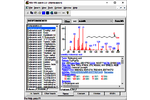 is our recommended base library, large, general purpose, strongly evaluated, and purchased by most customers. NEW: NIST 2026 Release!
 - Wiley Registry 2023
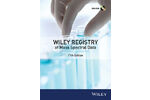 is the the world's largest EI MS library, general in purpose, and optionally combined with NIST MS.
- Other Wiley specialty libraries focus on specific classes of compounds like drugs, pesticides, flavors and fragrances.
- NIST 26
- Call or e-mail us to discuss your library needs.
 NIST 2026 Get new licenses for NIST mass spectral library, EI MS spectra, MS/MS, GC data here. Includes electron ionization (EI) data, AMDIS software. Standard, Agilent, Shimadzu, Multiformat available.
 Wiley Registry 2023 Wiley Registry 2023 Mass Spectral Library. The world's largest MS library. Optionally combined with NIST.
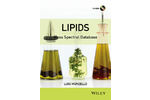 Wiley Lipids Mass Spectral Database Description by Luigi Mondello, July 2016 Lipids are one of the major constituents of food and they have an essential role in human diet, metabolism, physiological and pathological processes. Many lipids compounds present very similar mass spectra, therefore mass spectra supported by chromatographic is fundamental for correct compound identification in the research field. The Lipids Mass Spectral Database gives significant support for peak assignment in complex mixtures making it a valuable tool...
 Wiley Pesticides Mass Spectral Library with LRI, 2nd Edition Description (July 2016) by Prof Luigi Mondello Pesticides and agrochemicals are widely used in the production of large-scale agriculture. Their determination is essential for consumer’s health protection. Mass spectrometry is the most important technology for pesticide analysis and the Pesticides Library provides significant support for peak assignment in complex mixtures. The Mass Spectra of Pesticides with Retention Indices, 2nd Edition, contains 1,300 pesticide molecules classified in 20 d...
 Wiley Designer Drugs Identify designer drugs by EI mass spectra. Designer drugs are often illicit, synthesized from common chemicals, novel to evade detection, and skillfully marketed under attractive, often exotic names.
 Wiley Flavors/Fragrances
(FFNSC)EI mass spectra with GC linear retention indices (LRI), enabling more reliable complex mixtures of flavors and fragrances even where they have identical spectra. Wiley Drugs/Poisons/Pesticides/Pollutants & Metabolites The world's most comprehensive reference for clinical and forensic toxicologists is keeping pace with recent developments in clinical and forensic toxicology. Mass spectral (EI) and GC data library.
 Wiley FAMEs Fatty Acid Methyl Esters: Mass Spectral Database Fatty acids are important compounds in food analysis since they are sample-specific.
 Wiley Biologically and Environmentally Important Organic Compounds: GC-MS Library
(Isidorov)Description by Valery A. Isidorov, Jan 2021 Accelerate your GC-MS analysis! This new database from Wiley features mass spectra for over 1,800 biologically and environmentally important organic compounds in the form of their trimethylsilyl derivatives (TMS), along with TMS linear temperature programmed chromatographic retention indices (from 713 to 4700 index units). A point of special interest is that this library has analytical parameters of previously noninvestigated substances detected by th... NIST26 MS/MS A library of 3.2 million MS/MS spectra of 68K+ compounds, 567K precursor ions, obtained from ion trap, collision cell, and HCD (orbitrap) instruments.
 Wiley LC-HR-MS/MS Library of Drugs, Poisons and Their Metabolites Description by Hans H. Maurer, Dirk K. Wissenbach, Armin A. Weber, 2019 Optimize your metabolite-based LC-MSn screening and minimize false negative results. The Maurer/Wissenbach/Weber LC-MSn Library of Drugs, Poisons, and Their Metabolites, Second Edition provides a proven metabolite-based LCMSn screening method and MS2 and MS3 spectra of over 2,270 parent compounds and over 3,600 of their metabolites, making it one of the only LC-MSn screening libraries that focuses on metabolite spectra. The...
 Wiley Tandem MSMS
(MSforID)Contains 10,000 positive and negative mode tandem MS/MS spectra of over 1200 compounds of interest for forensics, toxicology, and pathology.
Available Wiley and NIST libraries include
| Library Name | Date | EI MS spectra | MS/MS spectra | GC and retention index records |
|---|---|---|---|---|
| EI MS Libraries (70 eV electron ionization, MS, GC/MS) | ||||
| NIST26 EI (recommended base library) | 2026-06 | 431,277 | 527,093 | |
| Wiley Registry 2023 | 2023-09 | 873,300 | ||
| Wiley Registry + NIST 2023 combined |
2023-09 NEW | 1,180,000 | 2.37 million | 491790 |
| Wiley Lipids Mass Spectral Database | 2017 | 430 | ||
| Wiley Pesticides Mass Spectral Library with LRI, 2nd Edition | 2017 | |||
| Wiley Designer Drugs | 2026-03 | 37075 | 27900 | |
| Wiley Flavors/Fragrances (FFNSC) | 2015 | 3000 | Yes | |
| Wiley Drugs/Poisons/Pesticides/Pollutants & Metabolites (Maurer/Pfleger/Weber) | 2023 | 10948 | Yes | |
| Wiley FAMEs Fatty Acid Methyl Esters: Mass Spectral Database | 2011 | 240 | YES | |
| Wiley Biologically and Environmentally Important Organic Compounds: GC-MS Library (Isidorov) | 2021 | 1926 | YES | |
| Tandem MS/MS Libraries (ESI/LC/QqQ/MSn/...) | ||||
| NIST26 MS/MS (recommended base library) | 2026-06 NEW | 3.2 million | ||
| Wiley LC-HR-MS/MS Library of Drugs, Poisons and Their Metabolites (Maurer/Meyer/Helfer/Weber) | 2018-06 | >5,000 | ||
| Wiley Tandem MSMS (MSforID) | 2012 | 12048 | ||
| Chart lists number of spectra or data records for each library. | ||||
and search software:
| Program Name | Included with | Purpose |
|---|---|---|
| NIST MS Search | NIST 26 and Wiley databases | EI MS, structural, and some GC and MS/MS matching against libraries; browsing, PBM, structural, and PBM search of the multiple libraries |
| NIST AMDIS | NIST 26 and free | GC/MS data reading, viewing, deconvolution, and target identification; integrated with NIST MS Search |
| NIST GC software | NISTGC | GC data lookup (specialized version of NIST MS Search enhanced for GC) |